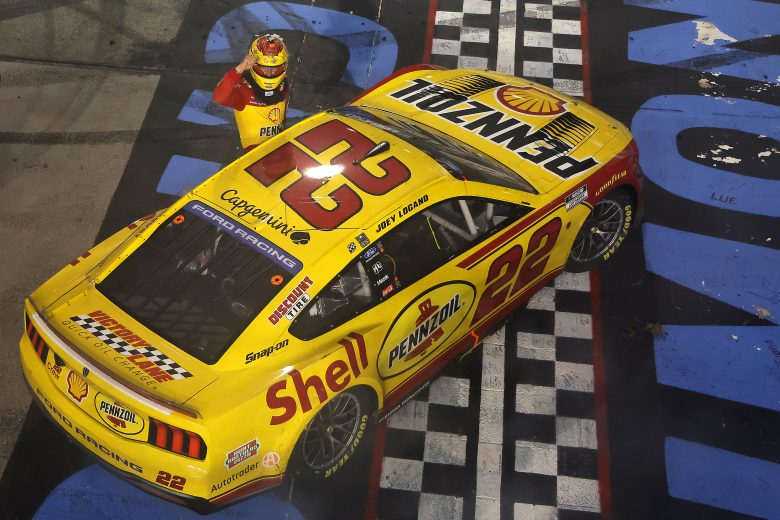
A etapa da NASCAR Cup Series em Richmond Raceway apresentou dois cenários completamente diferentes. Na frente, Joey Logano confirmou sua recuperação na temporada com uma vitória construída nos momentos decisivos da corrida. No fundo do pelotão, a disputa pela última vaga nos playoffs ficou ainda mais apertada.
O Cook Out 400, disputado no tradicional oval de 0,75 milha da Virgínia, foi a antepenúltima corrida da temporada regular e colocou em jogo pontos fundamentais para os pilotos que ainda buscavam uma vaga no Chase.
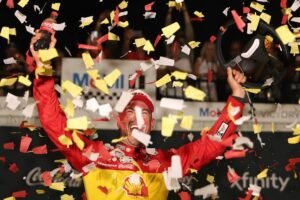
No fim, Joey Logano foi quem comemorou.
O piloto da Team Penske superou Chase Briscoe nas voltas finais e conquistou sua 39ª vitória na NASCAR Cup Series, a terceira em Richmond e a segunda da temporada de 2026.
Mais importante do que o número de vitórias, porém, foi o momento em que ela aconteceu.
Depois de um início de campeonato abaixo das expectativas, Logano encontrou velocidade justamente quando a temporada começa a entrar em sua fase decisiva.
Richmond não apenas colocou o piloto novamente entre os protagonistas. Também mudou completamente sua perspectiva para o Chase.
Logano vence quando a corrida realmente precisava ser decidida
Joey Logano não dominou as 400 voltas.
Na verdade, a corrida teve diferentes protagonistas ao longo da noite.
Ryan Blaney foi o grande nome do início. Largando da pole position, o piloto da Team Penske venceu o primeiro estágio depois de liderar 60 das primeiras 70 voltas.
A força da Penske ficou evidente desde o começo, mas a dinâmica da prova mudou conforme os ciclos de pit stops avançaram.
Na segunda metade da corrida, o protagonismo passou para Chase Briscoe.
O piloto da Joe Gibbs Racing liderou 171 voltas, mais do que qualquer outro competidor, e parecia ter construído o cenário ideal para finalmente conquistar uma vitória em Richmond.
Mas Logano ainda tinha uma carta importante.
Nas voltas finais, o Ford #22 ganhou desempenho com pneus mais novos. Quando faltavam aproximadamente 25 voltas, Logano começou a reduzir a vantagem de Briscoe.
A pressão aumentou.
Pouco depois, Logano conseguiu assumir a liderança.
Briscoe permaneceu próximo, mas não encontrou uma oportunidade para recuperar a posição.
Logano cruzou a linha de chegada com apenas 0,392 segundo de vantagem.
Foi uma vitória construída menos pela dominância absoluta e mais pela capacidade de aparecer no momento certo.
Em uma corrida de 400 voltas, essa diferença pode ser fundamental.
Briscoe deixa Richmond com a sensação do que poderia ter sido
Se Logano foi o vencedor, Chase Briscoe foi provavelmente o piloto que saiu de Richmond com a maior sensação de oportunidade perdida.
O Toyota #19 apresentou velocidade durante boa parte da prova.
Briscoe liderou 171 voltas, venceu um estágio e permaneceu constantemente entre os principais candidatos à vitória.
O problema é que Richmond exige mais do que velocidade pura.
O desgaste dos pneus, os long runs e os ciclos de pit stops podem alterar completamente o equilíbrio de um carro.
Foi exatamente isso que aconteceu.
Quando Logano voltou à pista com pneus mais novos, sua vantagem de ritmo aumentou rapidamente.
Briscoe não conseguiu responder.
O resultado foi o segundo lugar, seu terceiro vice-campeonato de corrida na temporada.
Apesar da frustração, o resultado tem grande valor para o campeonato.
Briscoe chega ao Chase demonstrando que possui velocidade suficiente para disputar vitórias e, principalmente, para permanecer entre os candidatos quando a temporada entrar em sua fase decisiva.
Cindric finalmente encontra a resposta
Um dos grandes destaques de Richmond foi Austin Cindric.
O piloto da Team Penske terminou em terceiro, conquistando seu melhor resultado da temporada.
O detalhe que torna o resultado ainda mais importante é a posição de largada.
Cindric começou a corrida apenas em 23º.
Sua recuperação foi construída ao longo dos diferentes ciclos de pit stops, com bom ritmo e execução eficiente da equipe.
O piloto conseguiu avançar progressivamente e apareceu entre os cinco primeiros durante a corrida.
O terceiro lugar não foi apenas um resultado isolado.
Cindric está envolvido na disputa por uma vaga no Chase, e os pontos conquistados em Richmond podem representar uma diferença significativa nas duas últimas etapas da temporada regular.
Para uma temporada que vinha sendo marcada pela irregularidade, o resultado chega em um momento importante.
Hamlin mantém o controle do campeonato
Mesmo sem vencer, Denny Hamlin saiu de Richmond mantendo a liderança da classificação.
O piloto da Joe Gibbs Racing terminou em quarto e novamente demonstrou consistência em um tipo de circuito no qual costuma apresentar bom desempenho.
Neste momento, a questão para Hamlin já não é simplesmente conseguir uma vaga no Chase.
A classificação está muito mais confortável.
O desafio será transformar essa regularidade em um campeonato.
Richmond reforçou a impressão de que Hamlin continua sendo uma das referências da temporada, enquanto a JGR mantém vários carros competitivos na parte dianteira do grid.
Hendrick Motorsports apresenta sinais de recuperação
A Hendrick Motorsports também teve um desempenho importante em Richmond.
Chase Elliott terminou em quinto, Kyle Larson em sexto, Christopher Bell em sétimo e William Byron em nono.
Quatro carros entre os dez primeiros colocaram a organização novamente em evidência.
O resultado é especialmente relevante porque a Hendrick vinha enfrentando dificuldades durante a temporada de verão.
Richmond não resolveu todos os problemas da equipe, mas mostrou sinais de recuperação.
Para uma organização que tradicionalmente chega ao Chase como uma das principais forças do campeonato, encontrar competitividade antes do início dos playoffs pode ser tão importante quanto dominar uma corrida específica.
A temporada regular serve, em grande parte, para construir essa base.
E Richmond foi um passo nessa direção.
Pneus voltam a ser protagonistas
Richmond é uma das pistas em que o gerenciamento de pneus tem papel fundamental.
O oval de 0,75 milha exige bastante do equipamento e, ao mesmo tempo, permite longos períodos de bandeira verde.
Isso faz com que o comportamento do carro mude significativamente ao longo de cada stint.
A corrida mostrou exatamente essa característica.
Briscoe conseguiu construir uma vantagem importante durante determinados momentos, mas Logano encontrou uma combinação mais eficiente para as voltas finais.
Com pneus mais novos, o Ford #22 conseguiu reduzir rapidamente a diferença.
A chegada por apenas 0,392 segundo mostra o quanto o momento das paradas e a condição dos pneus foram importantes para definir o vencedor.
Richmond é uma corrida de paciência
A prova também reforçou uma característica que se tornou comum nas corridas de short tracks da era do Next Gen.
Richmond não necessariamente entrega a mesma intensidade de ultrapassagens encontrada em outros tipos de circuito.
A configuração da pista pode limitar as linhas disponíveis, enquanto o comportamento dos pneus influencia diretamente a capacidade de ataque.
Por isso, a corrida exige paciência.
É preciso saber quando atacar.
É preciso saber quando preservar os pneus.
E é preciso compreender que uma vantagem construída com 100 voltas ainda pode desaparecer completamente antes da bandeirada.
Briscoe tinha o carro mais dominante durante boa parte da prova.
Logano tinha o conjunto mais eficiente quando realmente importava.
Apenas 11 carros terminaram na volta do líder
Outro dado importante de Richmond foi o tamanho da diferença entre os primeiros colocados e o restante do pelotão.
Dos 37 pilotos que largaram, apenas 11 terminaram na volta do líder.
Carson Hocevar foi o único piloto a abandonar por um problema mecânico, depois de reduzir demais a marcha e sofrer uma falha na transmissão.
O dado reforça a importância da consistência em Richmond.
Em uma pista curta, uma pequena perda de ritmo pode rapidamente colocar um piloto fora da volta do líder, especialmente durante longos períodos de bandeira verde.
Dillon não consegue repetir sua história em Richmond
Austin Dillon chegou ao fim de semana com uma expectativa especial.
O piloto buscava sua terceira vitória consecutiva em Richmond, algo que não acontecia desde Bobby Allison em 1983.
Mas a tentativa terminou apenas na 19ª posição.
Dillon, portanto, não conseguiu repetir a sequência histórica.
O resultado também reforça uma das características mais importantes de Richmond: o histórico recente não garante absolutamente nada.
Mesmo tendo vencido as duas últimas corridas no circuito, Dillon precisou enfrentar uma realidade completamente diferente em 2026.
Logano transformou sua temporada
Talvez a principal história de Richmond seja justamente a transformação da temporada de Joey Logano.
O início do campeonato esteve muito abaixo do padrão esperado para um tricampeão da NASCAR Cup Series.
Mas as últimas corridas apresentaram uma mudança significativa.
Com a vitória em Richmond, Logano chegou à segunda vitória nas últimas quatro corridas.
A evolução na classificação também foi expressiva.
O piloto saiu da 20ª posição e chegou ao nono lugar do campeonato em apenas seis corridas.
Isso muda completamente sua perspectiva para o Chase.
Logano não chega aos playoffs apenas como um piloto classificado.
Ele chega em um momento de crescimento.
E existe um fator que não pode ser ignorado: experiência.
O piloto da Penske já conquistou três campeonatos e conhece o formato dos playoffs como poucos no grid.
Se a evolução continuar, Logano pode chegar à fase decisiva em uma posição muito mais perigosa do que sua campanha no início do ano sugeria.
A luta pela última vaga esquenta
Enquanto Logano ganhou tranquilidade, outros pilotos deixaram Richmond ainda mais pressionados.
Shane van Gisbergen terminou em 14º e permaneceu na 16ª posição, que naquele momento representava a última vaga para os playoffs.
O piloto da Trackhouse manteve uma vantagem de 50 pontos sobre Ryan Preece, enquanto Ross Chastain ficou 63 pontos atrás de van Gisbergen.
A disputa, portanto, continua completamente aberta.
A classificação após Richmond colocou van Gisbergen na frente desse grupo, seguido por Ryan Preece, Ross Chastain, Brad Keselowski e Erik Jones.
Com apenas duas corridas restantes, ainda existe espaço suficiente para mudanças importantes.
Preece chega ao momento decisivo
Para Ryan Preece, a próxima corrida ganha importância adicional.
A etapa será disputada no New Hampshire Motor Speedway, uma pista na qual o piloto da RFK Racing terá uma oportunidade importante para recuperar terreno.
A situação matemática ainda é complicada, mas o calendário oferece exatamente o tipo de oportunidade que Preece precisa.
Com duas corridas restantes, cada posição conquistada pode significar uma mudança relevante na disputa pela última vaga.
A pressão, portanto, aumenta.
Chastain precisa reagir
Ross Chastain também chega à reta final da temporada regular em uma situação delicada.
O piloto da Trackhouse terminou Richmond em 12º e continua atrás de van Gisbergen na classificação.
O problema é que, a partir deste momento, resultados medianos podem não ser suficientes.
Chastain precisa começar a terminar à frente dos adversários diretos.
A vantagem necessária para entrar no Chase pode desaparecer rapidamente em uma única corrida, especialmente em pistas nas quais incidentes e estratégias podem alterar completamente o resultado.
New Hampshire será uma oportunidade.
Daytona será a última.
E a margem para erros está diminuindo.
Como fica o campeonato após Richmond
Denny Hamlin continua na liderança da classificação, seguido por Ryan Blaney e Ty Gibbs.
Tyler Reddick permanece entre os principais nomes do campeonato, enquanto outros candidatos seguem próximos.
A grande mudança aconteceu com Joey Logano.
Depois da vitória, o piloto saltou para o nono lugar e passou a ocupar uma posição muito mais confortável entre os candidatos ao título.
No outro extremo da classificação, a atenção está concentrada na 16ª posição.
É ali que a batalha pelo Chase permanece mais intensa.
O que Richmond mostrou sobre o Chase
A etapa deixa algumas conclusões importantes para a reta final da temporada regular.
Primeiro: Logano voltou a ser um candidato relevante.
Duas vitórias nas últimas quatro corridas colocam o piloto da Penske em um momento extremamente positivo antes dos playoffs.
Segundo: a Joe Gibbs Racing continua forte.
Briscoe terminou em segundo, Hamlin em quarto e Bell em sétimo. A equipe segue colocando vários carros na frente e demonstra profundidade no elenco.
Terceiro: a Hendrick Motorsports encontrou sinais de recuperação.
Quatro carros entre os nove primeiros representam uma resposta importante depois de um período menos consistente.
Quarto: a última vaga do Chase continua aberta.
Van Gisbergen ainda está dentro, mas Preece, Chastain, Keselowski e Erik Jones continuam com possibilidades.
E quinto: experiência pode voltar a ser um fator decisivo.
Logano é o melhor exemplo.
O piloto começou a temporada abaixo das expectativas, recuperou terreno e agora chega à fase mais importante do campeonato em ascensão.
New Hampshire e Daytona ganham peso enorme
Com Richmond encerrado, restam apenas duas corridas para o fim da temporada regular.
New Hampshire será o próximo desafio.
Depois, Daytona encerrará a fase classificatória e definirá definitivamente os 16 pilotos que disputarão o Chase.
Para os pilotos já classificados, o objetivo será chegar aos playoffs com o máximo de confiança e desempenho possível.
Para aqueles que estão fora da linha de corte, cada volta terá um significado diferente.
Não haverá espaço para administrar.
Será necessário atacar.
Conclusão
Richmond foi uma etapa de transição para a NASCAR Cup Series.
Joey Logano venceu no momento certo, conquistou sua 39ª vitória na categoria e confirmou que sua recuperação deixou de ser apenas uma sequência de bons resultados.
Chase Briscoe terminou em segundo depois de liderar 171 voltas e mostrou novamente que possui velocidade para disputar vitórias.
Austin Cindric conquistou seu melhor resultado da temporada e ganhou pontos importantes para sua campanha.
Denny Hamlin manteve a liderança do campeonato.
A Hendrick Motorsports apresentou sinais de recuperação ao colocar quatro carros entre os dez primeiros.
E, na parte decisiva da classificação, a disputa pela última vaga no Chase ficou ainda mais apertada.
Com apenas duas corridas restantes, New Hampshire e Daytona serão fundamentais.
Logano chega embalado.
Briscoe chega competitivo.
Hamlin continua no controle.
E os pilotos que estão fora da linha de corte já não podem se dar ao luxo de esperar.
Richmond mostrou que a temporada pode mudar rapidamente.
Agora, a NASCAR entra definitivamente no momento em que cada ponto, cada pit stop e cada volta podem decidir o futuro de um piloto no campeonato.
NASCAR Cup Series at Richmond 2026: Logano Confirms His Resurgence as the Chase Battle Intensifies
The NASCAR Cup Series at Richmond Raceway produced two completely different stories.
At the front, Joey Logano confirmed his resurgence with a victory built around timing, strategy and strong late-race pace.
Further down the field, the battle for the final Chase position became even tighter.
The Cook Out 400, held on Richmond’s traditional 0.75-mile oval, was the third-to-last race of the regular season and carried major implications for drivers still fighting for a playoff position.
In the end, Joey Logano was the one celebrating.
The Team Penske driver passed Chase Briscoe in the closing stages to claim his 39th NASCAR Cup Series victory, his third at Richmond and his second of the 2026 season.
More important than the numbers, however, was the timing.
After a disappointing start to the championship, Logano has found his form just as the season reaches its most important phase.
Richmond did more than put him back among the contenders.
It completely changed his outlook heading into the Chase.
Logano Wins When the Race Really Needed to Be Decided
Joey Logano did not dominate all 400 laps.
Instead, the race featured several different protagonists.
Ryan Blaney was the leading figure early on. Starting from pole, the Team Penske driver won the opening stage after leading 60 of the first 70 laps.
Penske’s strength was evident from the beginning, but the race dynamics changed as the pit-stop cycles developed.
In the second half of the race, Chase Briscoe took control.
The Joe Gibbs Racing driver led 171 laps, more than anyone else in the field, and appeared to have built the ideal scenario for finally turning his Richmond pace into a victory.
But Logano had another strategy.
In the closing stages, the No. 22 Ford gained significant pace on fresher tires. With approximately 25 laps remaining, Logano began cutting into Briscoe’s advantage.
The pressure increased.
Soon after, Logano took the lead.
Briscoe remained close but could not find a way back past.
Logano crossed the finish line just 0.392 seconds ahead.
It was a victory built less on complete dominance and more on being the most efficient driver when the race needed to be decided.
Briscoe Leaves Richmond With a Major What-If
If Logano was the winner, Chase Briscoe was probably the driver who left Richmond with the biggest sense of a missed opportunity.
The No. 19 Toyota showed strong pace for most of the race.
Briscoe led 171 laps, won a stage and remained among the leading contenders throughout the event.
The problem was that Richmond demands more than raw speed.
Tire wear, long runs and pit-stop cycles can completely change the balance of a car.
That is exactly what happened.
When Logano returned to the track on fresher tires, his pace advantage increased quickly.
Briscoe had no answer.
The result was second place, his third runner-up finish of the season.
Despite the disappointment, the result remains extremely valuable for the championship.
Briscoe enters the Chase demonstrating that he has the speed to fight for victories and remain among the title contenders when the season enters its decisive phase.
Cindric Finally Finds the Breakthrough
One of the biggest highlights of Richmond was Austin Cindric.
The Team Penske driver finished third, earning his best result of the season.
The starting position makes the result even more impressive.
Cindric began the race from only 23rd.
His recovery was built through pace, strategy and efficient pit stops.
The driver steadily moved through the field and eventually found himself inside the top five.
The third-place finish was not simply an isolated result.
Cindric is involved in the battle for a Chase position, and the points earned at Richmond could become extremely valuable over the final two regular-season races.
For a season that had been marked by inconsistency, the result came at an important time.
Hamlin Remains in Control
Despite not winning, Denny Hamlin left Richmond still leading the championship standings.
The Joe Gibbs Racing driver finished fourth and once again demonstrated his strength on a short track.
At this point, Hamlin’s main challenge is no longer simply qualifying for the Chase.
His position is much more comfortable.
The real question is whether he can turn his regular-season consistency into a championship.
Richmond once again showed the strength of the No. 11 on short tracks and confirmed that JGR remains one of the deepest organizations in the field.
Hendrick Motorsports Shows Signs of Recovery
The race was also important for Hendrick Motorsports.
Chase Elliott finished fifth, Kyle Larson sixth, Christopher Bell seventh and William Byron ninth.
Four Hendrick cars finished inside the top 10.
The result is particularly significant because the organization had struggled for consistency during the summer.
Richmond did not solve every issue, but it provided an important sign of progress.
For a team that traditionally enters the Chase as one of the championship favorites, finding competitive performance before the playoffs may be just as important as dominating a single race.
The regular season is, in many ways, about building that foundation.
Richmond was another step in that direction.
Tires Become a Major Factor Again
Richmond is one of the tracks where tire management plays a critical role.
The 0.75-mile oval places significant demands on the tires while also allowing long green-flag runs.
As a result, car behavior can change dramatically throughout each stint.
The race demonstrated that characteristic once again.
Briscoe built a significant advantage during parts of the race, but Logano found a more effective combination for the closing laps.
With fresher tires, the No. 22 Ford quickly reduced the gap.
The 0.392-second margin at the finish demonstrated just how important pit-stop timing and tire condition were to the outcome.
Richmond Is a Race of Patience
The race also reinforced one of the defining characteristics of short-track racing in the Next Gen era.
Richmond does not always produce the same level of passing intensity seen on other types of circuits.
The track configuration can limit available racing lines, while tire behavior directly affects a driver’s ability to attack.
That makes Richmond a race of patience.
Drivers have to know when to attack.
They have to know when to preserve their tires.
And they must understand that a lead built with 100 laps remaining does not necessarily mean they are in the best position to win.
Briscoe had the most dominant car for much of the night.
Logano had the most effective package when it mattered.
Only 11 Cars Finished on the Lead Lap
Another important statistic from Richmond was the gap between the leaders and the rest of the field.
Of the 37 drivers who started, only 11 finished on the lead lap.
Carson Hocevar was the only driver to retire because of a mechanical issue after downshifting too aggressively and suffering transmission failure.
The numbers reinforce the importance of consistency at Richmond.
On a short track, even a small loss of pace can quickly put a driver a lap down, especially during extended green-flag runs.
Dillon Fails to Repeat His Richmond History
Austin Dillon entered the weekend with a unique goal.
The driver was looking for his third consecutive Richmond victory, something that had not been accomplished since Bobby Allison in 1983.
The attempt ended with Dillon finishing only 19th.
He therefore failed to add another chapter to the track’s history.
The result also reinforces one of Richmond’s most important characteristics: recent success guarantees nothing.
Even after winning the previous two races at the track, Dillon faced a completely different reality in 2026.
Logano Has Completely Changed His Season
Perhaps the biggest story coming out of Richmond is Joey Logano’s transformation.
The beginning of his season was far below the standard expected from a three-time NASCAR Cup Series champion.
But the last few races have produced a significant change.
With his Richmond victory, Logano now has two wins in his last four races.
His progress in the standings has been equally impressive.
He moved from 20th to ninth in the championship in only six races.
That completely changes his outlook for the Chase.
Logano is no longer simply a driver trying to survive the season.
He enters the playoffs in a period of momentum.
And one factor cannot be ignored: experience.
The Penske driver has already won three championships and understands the playoff format better than most drivers in the field.
If his current form continues, Logano could enter the decisive phase of the season as a much greater threat than his early-season results suggested.
The Battle for the Final Chase Spot Intensifies
While Logano gained breathing room, several other drivers left Richmond under even greater pressure.
Shane van Gisbergen finished 14th and remained 16th in the standings, which at that point represented the final playoff position.
The Trackhouse driver held a 50-point advantage over Ryan Preece, while Ross Chastain was 63 points behind van Gisbergen.
The battle therefore remains wide open.
After Richmond, van Gisbergen led that group, followed by Ryan Preece, Ross Chastain, Brad Keselowski and Erik Jones.
With two regular-season races remaining, significant changes are still possible.
Preece Enters the Critical Stage
For Ryan Preece, the next race carries additional importance.
The series now heads to New Hampshire Motor Speedway, a track that represents an important opportunity for the RFK Racing driver to recover ground.
The mathematical situation remains difficult, but the schedule provides precisely the kind of opportunity Preece needs.
With only two races left, every position gained could make a significant difference in the battle for the final playoff spot.
The pressure is rising.
Chastain Needs a Response
Ross Chastain also enters the final stretch of the regular season in a difficult position.
The Trackhouse driver finished 12th at Richmond and remains behind teammate van Gisbergen in the standings.
At this stage, average results may no longer be enough.
Chastain needs to begin finishing ahead of his direct rivals.
The gap needed to reach the Chase can disappear quickly in a single race, especially on tracks where incidents and strategy can completely change the outcome.
New Hampshire will be an opportunity.
Daytona will be the final chance.
And the margin for error is shrinking.
The Championship Picture After Richmond
Denny Hamlin remains at the top of the standings, followed by Ryan Blaney and Ty Gibbs.
Tyler Reddick remains among the leading championship contenders, while several other title candidates remain within striking distance.
The biggest change came from Joey Logano.
After his victory, he moved to ninth and now occupies a much more comfortable position among the championship contenders.
At the other end of the standings, attention is focused on 16th place.
That is where the Chase battle remains most intense.
What Richmond Tells Us About the Chase
The race leaves several important conclusions for the final stages of the regular season.
First: Logano is once again a serious contender.
Two victories in his last four races place the Penske driver in an excellent position heading into the playoffs.
Second: Joe Gibbs Racing remains strong.
Briscoe finished second, Hamlin fourth and Bell seventh. The organization continues to put multiple cars near the front and has significant depth.
Third: Hendrick Motorsports is showing signs of recovery.
Four cars inside the top nine represent an important response after a less consistent stretch.
Fourth: the final Chase position remains wide open.
Van Gisbergen is still inside, but Preece, Chastain, Keselowski and Erik Jones remain in contention.
And fifth: experience may once again become decisive.
Logano is the clearest example.
He started the season below expectations, recovered ground and now enters the most important part of the championship with momentum.
New Hampshire and Daytona Become Crucial
With Richmond complete, only two races remain in the regular season.
New Hampshire is next.
Daytona will then close the regular season and definitively determine the 16 drivers who will compete in the Chase.
For drivers already qualified, the goal will be to enter the playoffs with as much confidence and performance as possible.
For those outside the cutoff, every lap will carry a different meaning.
There will be little room for caution.
They will have to attack.
Conclusion
Richmond was a turning point for the NASCAR Cup Series.
Joey Logano won at exactly the right moment, claiming his 39th Cup Series victory and confirming that his resurgence is no longer just a short run of good results.
Chase Briscoe finished second after leading 171 laps and once again demonstrated that he has the speed to fight for victories.
Austin Cindric earned his best result of the season and collected crucial points for his campaign.
Denny Hamlin maintained the championship lead.
Hendrick Motorsports showed signs of recovery by placing four cars inside the top 10.
And, at the most critical end of the standings, the battle for the final Chase position became even tighter.
With only two regular-season races remaining, New Hampshire and Daytona will be crucial.
Logano arrives with momentum.
Briscoe arrives with speed.
Hamlin remains in control.
And the drivers outside the cutoff can no longer afford to wait.
Richmond showed how quickly a season can change.
Now NASCAR has entered the stage where every point, every pit stop and every lap can determine a driver’s future in the championship.
Por: Ana Elisa
@ana_arquiteturaevelocidade
Tradução: Autoral
Informações/dados:Nascar