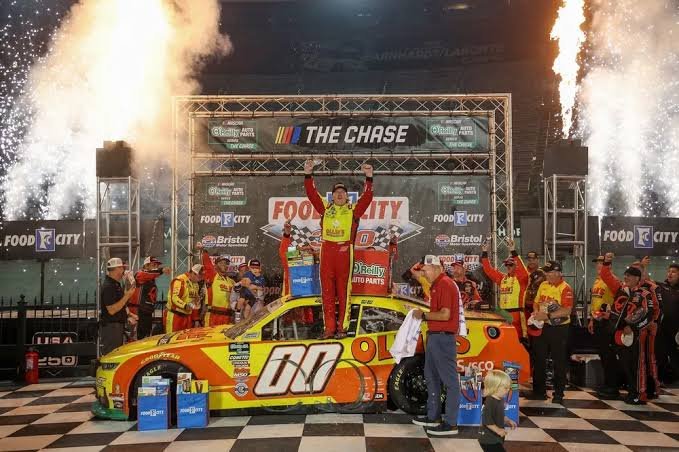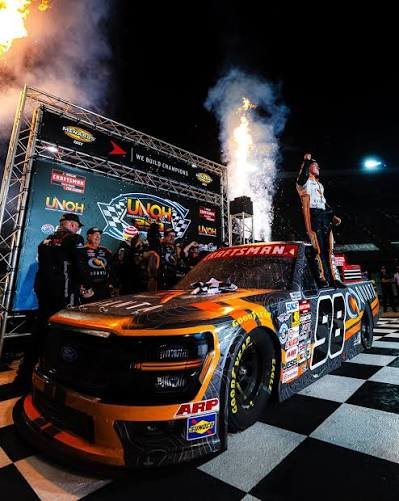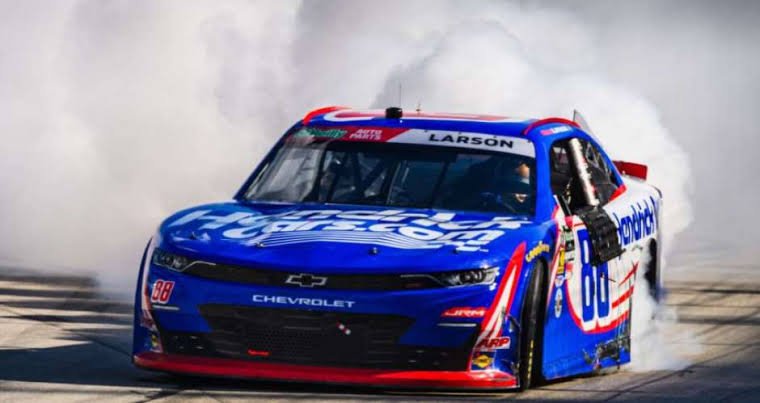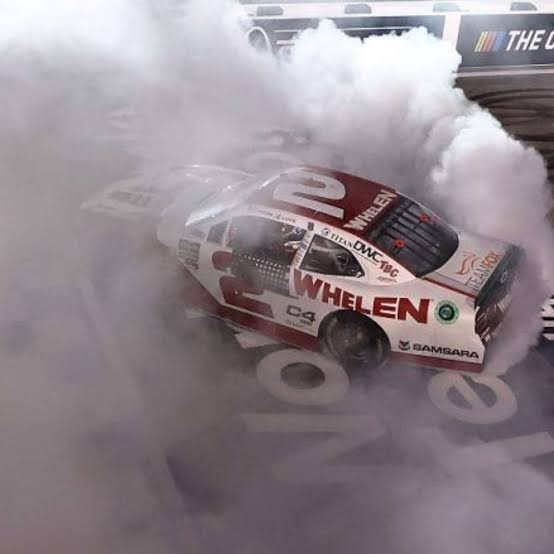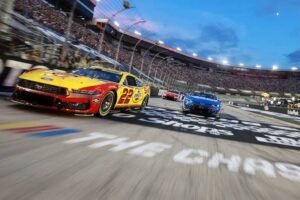
A NASCAR Cup Series chegou a Bristol para a terceira corrida do Chase de 2026, e o Bass Pro Shops Night Race entregou exatamente o tipo de prova que se espera do chamado “Last Great Colosseum”. Estratégia, desgaste, disputas agressivas, acidentes e uma mudança completa de cenário nas voltas finais transformaram a corrida em uma das mais movimentadas da temporada.
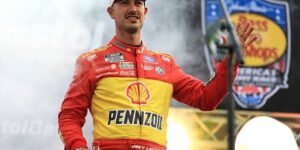
Joey Logano saiu de Bristol com a vitória após superar Ty Gibbs, Carson Hocevar e Kyle Larson na parte final da prova. O piloto da Team Penske conquistou sua terceira vitória da temporada e a 40ª da carreira na Cup Series.
Mais importante para o campeonato, Larson terminou em segundo e assumiu a liderança do Chase. A corrida também provocou uma grande mudança na situação de Ryan Blaney, que liderou mais voltas do que qualquer outro piloto, mas acabou fora da disputa depois de um incidente com Hocevar.
Bristol novamente mostrou por que é diferente
Bristol é um circuito de apenas 0,533 milha, mas sua configuração transforma cada volta em uma disputa constante por espaço. O traçado curto e extremamente inclinado faz com que o tráfego tenha um peso enorme na estratégia.
Em uma corrida de 500 voltas, pequenos erros podem se transformar rapidamente em grandes perdas. O piloto precisa administrar pneus, posicionamento e tráfego ao mesmo tempo em que tenta manter o carro competitivo nas duas linhas.
Foi exatamente isso que aconteceu durante a noite.
A primeira metade da corrida foi relativamente controlada, mas o cenário mudou completamente no estágio final. As bandeiras amarelas começaram a aparecer com maior frequência, os pilotos ficaram mais agressivos e a disputa pela vitória passou a envolver vários carros.
Ryan Blaney foi o grande protagonista da primeira metade
Se havia um piloto que parecia ter o controle da corrida durante boa parte da noite, era Ryan Blaney.
O piloto da Team Penske liderou 202 das 500 voltas, mais do que qualquer outro competidor. Blaney também venceu o Stage 2 e parecia estar construindo uma corrida capaz de colocá-lo novamente em uma posição importante no Chase.
A situação mudou após uma sequência de estratégias de pit stop e bandeiras amarelas.
Uma penalização relacionada à linha de entrada nos boxes prejudicou sua posição de pista, mas Blaney conseguiu recuperar terreno. Na reta final, ele voltou a aparecer entre os primeiros colocados e chegou a ultrapassar Carson Hocevar pelo segundo lugar.
Foi justamente nesse momento que a corrida mudou completamente para Blaney.
O acidente entre Ryan Blaney e Carson Hocevar
Depois de perder a segunda posição, Hocevar tentou recuperar o espaço imediatamente. Blaney protegeu sua linha e os dois carros acabaram se tocando.
O contato fez Blaney bater no muro e danificar seriamente o Ford número 12. O piloto não conseguiu continuar na disputa e terminou apenas em 33º.
Hocevar, por outro lado, conseguiu seguir na corrida e ainda terminou em terceiro.
O incidente não terminou na pista.
Depois da bandeirada, Blaney e Hocevar tiveram uma discussão no pit road que acabou em uma troca de socos. O episódio rapidamente se tornou um dos principais assuntos da noite e reforçou a reputação de Bristol como um dos circuitos onde as disputas podem ultrapassar os limites da pista.
Do ponto de vista do campeonato, porém, o impacto foi ainda maior para Blaney. Ele caiu para sexto no Chase e perdeu uma oportunidade importante de consolidar sua posição na disputa pelo título.
Ty Gibbs tinha o carro para vencer
Ty Gibbs foi provavelmente o piloto que mais parecia estar no caminho da vitória durante o estágio final.
O Toyota número 54, com o esquema especial inspirado na pintura da M&M’s utilizada por Kyle Busch, apresentou excelente desempenho em Bristol.
Gibbs liderou 120 voltas e chegou a abrir vantagem sobre seus principais adversários. O carro funcionava muito bem nas duas linhas e permitia que Gibbs permanecesse competitivo mesmo quando o tráfego aumentava.
A homenagem a Kyle Busch adicionou ainda mais significado à noite.
Busch construiu uma das maiores histórias de sua carreira justamente em Bristol, onde venceu oito vezes. Gibbs acabou assumindo o volante do carro especial e passou boa parte da corrida parecendo capaz de repetir parte daquele domínio.
Mas Bristol não costuma permitir que uma corrida seja decidida apenas pela velocidade.
O momento que mudou a corrida
Gibbs perdeu parte da vantagem quando Carson Hocevar começou a pressioná-lo.
A disputa entre os dois permitiu que outros pilotos se aproximassem. Kyle Larson também apareceu imediatamente atrás, enquanto Joey Logano avançava pelo grupo.
Em determinado momento, Gibbs se envolveu em um incidente de três carros com Alex Bowman e Cole Custer. Apesar do contato, conseguiu continuar sem abandonar a corrida.
Esse detalhe foi importante.
O acidente poderia ter encerrado a noite do piloto da Joe Gibbs Racing, mas Gibbs conseguiu permanecer na pista e continuar brigando pela vitória.
Ainda assim, o desgaste dos pneus e a pressão dos adversários começaram a mudar o equilíbrio da disputa.
Joey Logano aparece no momento decisivo
Joey Logano começou a noite mostrando velocidade.
O piloto do Ford número 22 venceu o Stage 1 e liderou 81 voltas naquela primeira parte da prova. Durante boa parte da corrida, entretanto, ele não parecia ser o favorito absoluto para a vitória.
Essa situação mudou na parte final.
Logano conseguiu permanecer próximo dos líderes enquanto a corrida entrava em seu trecho mais caótico. Quando a disputa entre Gibbs e Hocevar começou a abrir espaço, Logano aproveitou.
Na volta 494, faltando apenas seis voltas para o final, Logano encontrou uma oportunidade no tráfego e avançou para a liderança.
Foi a ultrapassagem que decidiu a corrida.
A partir daquele momento, o piloto da Penske conseguiu controlar as voltas finais e cruzou a linha de chegada em primeiro.
Kyle Larson continua extremamente consistente
Mesmo sem vencer, Kyle Larson saiu de Bristol com um resultado muito importante para o campeonato.
O piloto da Hendrick Motorsports terminou em segundo e conquistou seu terceiro top 5 nas três primeiras corridas do Chase.
A sequência é significativa.
Larson venceu em Gateway na semana anterior, quebrando uma sequência de 51 corridas sem vitória, e chegou a Bristol já em uma posição muito mais competitiva no campeonato.
Em Bristol, novamente conseguiu terminar entre os primeiros.
O resultado foi suficiente para colocá-lo na liderança do Chase por apenas um ponto sobre Denny Hamlin.
Mais do que a vitória em Gateway, a consistência começa a ser um dos elementos mais importantes da campanha de Larson nesta fase da temporada.
Carson Hocevar confirma sua força em Bristol
Carson Hocevar terminou em terceiro e teve uma das atuações mais importantes de sua temporada.
O piloto da Spire Motorsports passou boa parte da fase final brigando diretamente pela vitória e chegou a pressionar Gibbs pela liderança.
O resultado também mostrou que Hocevar tinha velocidade suficiente para competir com os principais nomes do campeonato em um dos circuitos mais difíceis da temporada.
Por outro lado, o incidente com Blaney certamente será lembrado como um dos momentos mais controversos da noite.
Na pista, Hocevar terminou no pódio.
Fora dela, sua disputa com Blaney acabou dominando parte da repercussão pós-corrida.
Christopher Bell aproveita a confusão
Christopher Bell terminou em quarto e teve uma corrida muito mais discreta.
O piloto da Joe Gibbs Racing largou em 12º e conseguiu avançar gradualmente durante a prova. Mesmo sem aparecer constantemente na disputa pela vitória, Bell permaneceu competitivo até o final.
O resultado foi importante porque Bristol é exatamente o tipo de corrida em que sobreviver aos incidentes pode ser tão importante quanto ter o carro mais rápido.
Bell saiu de Bristol em quarto lugar no Chase, 17 pontos atrás de Larson.
A corrida de Bristol também foi uma prova de sobrevivência
Um dos dados mais importantes da noite foi o número de carros na volta do líder.
Apenas 12 pilotos completaram as 500 voltas na mesma volta do vencedor.
Isso mostra o quanto Bristol cobrou dos carros e dos pilotos.
A corrida terminou com dez bandeiras amarelas, e a maior parte da ação aconteceu na fase final. A primeira metade teve apenas algumas interrupções naturais, mas a situação mudou drasticamente depois do segundo estágio.
A combinação entre tráfego, desgaste, contato e pressão do Chase transformou as últimas voltas em uma espécie de corrida dentro da corrida.
A estratégia teve papel importante
Bristol não é apenas uma questão de velocidade.
O gerenciamento dos pneus é fundamental porque o piloto precisa encontrar um equilíbrio entre preservar o equipamento e manter ritmo suficiente para não perder posições.
Além disso, cada bandeira amarela pode alterar completamente o cenário.
Um piloto que estava fora dos dez primeiros pode ganhar posições rapidamente com uma parada no momento certo. Da mesma forma, quem está na frente pode perder toda a vantagem caso uma cautela apareça imediatamente depois de um pit stop.
Foi exatamente esse tipo de dinâmica que deixou a parte final tão imprevisível.
Logano conseguiu estar na posição certa quando a corrida começou a se definir.
O impacto no Chase
Bristol era a terceira corrida do Chase e, portanto, cada resultado começa a ter um peso maior na classificação.
Kyle Larson saiu como líder do campeonato.
Denny Hamlin terminou em oitavo e perdeu a liderança, ficando um ponto atrás de Larson.
Joey Logano, por sua vez, ganhou quatro posições no campeonato e passou a ocupar o terceiro lugar, 16 pontos atrás de Larson.
Christopher Bell aparece em quarto, 17 pontos atrás.
A situação de Ryan Blaney foi uma das maiores mudanças da noite. Depois de liderar 202 voltas, o abandono causado pelo acidente com Hocevar fez o piloto cair para sexto e ficar 52 pontos atrás do líder.
A diferença mostra como uma única situação pode mudar completamente o cenário do Chase.
Bristol mostrou duas formas diferentes de vencer
A corrida também foi interessante porque apresentou dois tipos de desempenho.
Blaney foi o piloto que mais dominou a distância total da prova. Liderou 202 voltas e venceu o Stage 2.
Gibbs teve o carro mais forte em boa parte do estágio final e liderou 120 voltas.
Logano, entretanto, foi quem conseguiu estar na frente no momento mais importante.
Essa é uma característica importante do formato do Chase.
Não basta necessariamente liderar a maior parte da corrida. É preciso sobreviver às últimas reinicializações, aos acidentes e ao tráfego e ainda ter velocidade para atacar quando a oportunidade aparece.
Logano fez exatamente isso.
O que Bristol deixa para o campeonato
A terceira etapa do Chase reforçou a importância da consistência.
Larson venceu em Gateway e terminou em segundo em Bristol. Esse tipo de sequência colocou o piloto da Hendrick na liderança do campeonato e criou uma situação interessante para as próximas etapas.
Logano também sai fortalecido depois de transformar uma corrida em que não parecia ter o domínio absoluto em uma vitória.
Hamlin continua próximo, enquanto Bell e Blaney permanecem dentro da disputa.
Ao mesmo tempo, pilotos como Gibbs e Hocevar mostraram velocidade suficiente para interferir diretamente na luta pelas primeiras posições.
A principal leitura de Bristol
Bristol não foi uma corrida decidida apenas pelo carro mais rápido.
Foi uma prova sobre posicionamento, gerenciamento de pneus, sobrevivência e tomada de decisão.
Blaney teve o maior número de voltas lideradas e terminou em 33º.
Gibbs liderou 120 voltas e terminou em quinto.
Hocevar brigou pela vitória e terminou em terceiro.
Larson não venceu, mas saiu líder do Chase.
E Logano, que soube permanecer próximo dos líderes durante a noite, encontrou a oportunidade na volta 494 e transformou essa oportunidade em vitória.
Esse é provavelmente o maior retrato da corrida.
Em Bristol, a corrida pode parecer controlada durante centenas de voltas e mudar completamente em poucos minutos.
Próxima parada: Kansas
Depois de Gateway e Bristol, o Chase segue para Kansas Speedway.
A próxima etapa será o Hollywood Casino 400, marcada para 27 de setembro.
Kansas apresenta um cenário completamente diferente de Bristol e poderá alterar novamente o equilíbrio entre os principais candidatos ao campeonato.
Larson chega como líder, mas com apenas um ponto de vantagem sobre Hamlin. Logano está 16 pontos atrás, Bell 17, enquanto a situação de Blaney ficou mais complicada após o acidente.
A partir daqui, cada posição começa a ganhar ainda mais importância.
Bristol deixou uma certeza: o Chase de 2026 está longe de estar definido.
NASCAR Cup Series: Joey Logano Wins One of the Most Chaotic Chase Races at Bristol
The NASCAR Cup Series headed to Bristol for the third race of the 2026 Chase, and the Bass Pro Shops Night Race delivered exactly what fans expect from the “Last Great Colosseum.” Strategy, tire wear, aggressive racing, crashes and a complete change of scenario in the closing laps turned the race into one of the most eventful rounds of the season.
Joey Logano left Bristol with the victory after beating Ty Gibbs, Carson Hocevar and Kyle Larson during the closing stages. The Team Penske driver earned his third win of the season and the 40th victory of his Cup Series career.
More importantly for the championship, Larson finished second and took the Chase lead. The race also dramatically changed Ryan Blaney’s situation after he led more laps than any other driver but was eventually involved in one of the night’s major incidents.
Bristol once again showed why it is different
Bristol is only 0.533 miles long, but its configuration turns every lap into a constant fight for space. The short track and steep banking make traffic a major factor in the strategy.
Over 500 laps, small mistakes can quickly become major losses. Drivers have to manage tires, positioning and traffic while keeping the car competitive on both lanes.
That was exactly what happened throughout the night.
The first half of the race was relatively controlled, but the situation changed completely during the final stages. Cautions became more frequent, drivers became more aggressive and the fight for the win began to involve several cars.
Ryan Blaney was the main character of the first half
If there was one driver who appeared to control the race for much of the night, it was Ryan Blaney.
The Team Penske driver led 202 of the 500 laps, more than any other competitor. Blaney also won Stage 2 and appeared to be building a race that could put him in an important position in the Chase.
That situation changed after a sequence of pit strategies and cautions.
A pit-road penalty affected his track position, but Blaney managed to recover. In the closing stages, he returned to the front group and even moved ahead of Carson Hocevar for second place.
That was when the race changed completely for Blaney.
The Ryan Blaney and Carson Hocevar incident
After losing second place, Hocevar immediately tried to regain the position. Blaney protected his line and the two cars eventually made contact.
The contact sent Blaney into the wall and caused significant damage to the No. 12 Ford. He was unable to continue fighting for the win and finished 33rd.
Hocevar, meanwhile, managed to continue and finished third.
The incident did not end on the track.
After the checkered flag, Blaney and Hocevar had an argument on pit road that escalated into a physical confrontation. The episode quickly became one of the main talking points of the night and reinforced Bristol’s reputation as a track where racing disputes can sometimes continue beyond the racing surface.
From a championship perspective, however, the impact was even greater for Blaney. He dropped to sixth in the Chase and lost an important opportunity to strengthen his position in the title fight.
Ty Gibbs had the car to win
Ty Gibbs was probably the driver who looked most capable of winning during the final stages.
The No. 54 Toyota, featuring a special paint scheme inspired by Kyle Busch’s M&M’s car, showed strong pace at Bristol.
Gibbs led 120 laps and managed to build an advantage over his main rivals. The car worked well in both lanes and allowed Gibbs to remain competitive even as traffic increased.
The Kyle Busch tribute added another layer of significance to the night.
Busch built one of the biggest chapters of his career at Bristol, where he won eight times. Gibbs took the wheel of the special car and spent much of the race looking capable of reproducing part of that success.
But Bristol rarely allows a race to be decided by speed alone.
The moment that changed the race
Gibbs began to lose some of his advantage as Carson Hocevar started applying pressure.
The battle between the two allowed other drivers to close in. Kyle Larson also appeared immediately behind them, while Joey Logano continued moving through the field.
At one point, Gibbs was involved in a three-car incident with Alex Bowman and Cole Custer. Despite the contact, he was able to continue without retiring from the race.
That detail was important.
The incident could have ended the Joe Gibbs Racing driver’s night, but Gibbs remained on track and continued fighting for the win.
However, tire wear and pressure from the drivers behind him gradually changed the balance of the battle.
Joey Logano appears at the decisive moment
Joey Logano started the night showing strong speed.
The No. 22 Ford driver won Stage 1 and led 81 laps during the first part of the race. For much of the night, however, he did not appear to be the clear favorite for victory.
That changed during the closing stages.
Logano remained close to the leaders as the race entered its most chaotic phase. When the battle between Gibbs and Hocevar created an opportunity, Logano took advantage.
On Lap 494, with only six laps remaining, Logano found an opening in traffic and moved into the lead.
That was the pass that decided the race.
From that point forward, the Penske driver controlled the closing laps and crossed the finish line first.
Kyle Larson continues to show consistency
Even without the win, Kyle Larson left Bristol with a very important championship result.
The Hendrick Motorsports driver finished second and recorded his third top-five finish in the first three Chase races.
The sequence is significant.
Larson won at Gateway the previous week, ending a 51-race winless streak, and arrived at Bristol in a much stronger championship position.
At Bristol, he once again finished among the leaders.
The result was enough to put him at the top of the Chase standings, just one point ahead of Denny Hamlin.
More than the Gateway victory itself, Larson’s consistency is becoming one of the most important elements of his championship campaign.
Carson Hocevar confirms his strength at Bristol
Carson Hocevar finished third and delivered one of the most significant performances of his season.
The Spire Motorsports driver spent much of the final stage fighting directly for the win and pressured Gibbs for the lead.
The result showed that Hocevar had enough speed to compete with the championship contenders at one of the most difficult tracks on the schedule.
On the other hand, the incident with Blaney will certainly be remembered as one of the most controversial moments of the night.
On the track, Hocevar finished on the podium.
Off the track, his confrontation with Blaney became one of the main stories surrounding the race.
Christopher Bell takes advantage of the chaos
Christopher Bell finished fourth and had a much quieter race.
The Joe Gibbs Racing driver started 12th and gradually moved forward throughout the event. Even without constantly appearing in the fight for the win, Bell remained competitive until the finish.
The result was important because Bristol is exactly the type of race where surviving the incidents can be just as important as having the fastest car.
Bell left Bristol fourth in the Chase standings, 17 points behind Larson.
Bristol was also a race about survival
One of the most important statistics of the night was the number of cars that finished on the lead lap.
Only 12 drivers completed all 500 laps on the same lap as the winner.
That shows how demanding Bristol was on both cars and drivers.
The race featured ten cautions, with much of the action concentrated in the final stages. The first half included relatively few interruptions, but the situation changed dramatically after the second stage.
The combination of traffic, tire wear, contact and Chase pressure turned the closing laps into a race within the race.
Strategy played an important role
Bristol is not simply about speed.
Tire management is critical because drivers have to find a balance between preserving their tires and maintaining enough pace to avoid losing positions.
Every caution can also completely change the situation.
A driver running outside the top ten can gain several positions with a well-timed pit stop. At the same time, a driver at the front can lose an entire advantage if a caution comes out immediately after a pit stop.
That type of dynamic made the closing stages so unpredictable.
Logano managed to be in the right position when the race began to take shape.
The impact on the Chase
Bristol was the third race of the Chase, meaning every result is beginning to carry even more weight in the standings.
Kyle Larson left as the championship leader.
Denny Hamlin finished eighth and lost the lead, moving one point behind Larson.
Joey Logano, meanwhile, gained four positions in the championship standings and moved into third, 16 points behind Larson.
Christopher Bell sits fourth, 17 points behind.
Ryan Blaney experienced one of the biggest changes of the night. After leading 202 laps, his retirement following the incident with Hocevar dropped him to sixth and left him 52 points behind the leader.
That gap demonstrates how a single incident can completely change the Chase picture.
Bristol showed two different ways to win
The race was also interesting because it presented two different types of performance.
Blaney was the driver who dominated the greatest portion of the race distance. He led 202 laps and won Stage 2.
Gibbs had the strongest car during much of the final stage and led 120 laps.
Logano, however, was the driver who managed to be in front when it mattered most.
That is an important characteristic of the Chase format.
It is not necessarily enough to lead most of the race. Drivers also have to survive the final restarts, crashes and traffic while still having enough speed to attack when an opportunity appears.
Logano did exactly that.
What Bristol means for the championship
The third Chase race reinforced the importance of consistency.
Larson won at Gateway and finished second at Bristol. That type of sequence put the Hendrick Motorsports driver at the top of the championship standings and created an interesting situation for the upcoming rounds.
Logano also leaves Bristol in a strong position after turning a race in which he did not have absolute control into a victory.
Hamlin remains close, while Bell and Blaney are still within the championship fight.
At the same time, drivers such as Gibbs and Hocevar demonstrated enough speed to directly influence the fight at the front.
The main takeaway from Bristol
Bristol was not a race decided simply by the fastest car.
It was a race about positioning, tire management, survival and decision-making.
Blaney led the most laps and finished 33rd.
Gibbs led 120 laps and finished fifth.
Hocevar fought for the win and finished third.
Larson did not win, but left as the Chase leader.
And Logano, who managed to remain close to the leaders throughout the night, found his opportunity on Lap 494 and turned it into a victory.
That is probably the best summary of the race.
At Bristol, a race can look completely under control for hundreds of laps and change entirely within a few minutes.
Next stop: Kansas
After Gateway and Bristol, the Chase moves to Kansas Speedway.
The next round will be the Hollywood Casino 400, scheduled for September 27.
Kansas presents a completely different challenge from Bristol and could once again change the balance among the championship contenders.
Larson arrives as the leader, but with only a one-point advantage over Hamlin. Logano is 16 points behind, Bell 17 points behind, while Blaney’s situation became more complicated after the Bristol incident.
From this point forward, every position becomes even more important.
Bristol made one thing clear: the 2026 Chase is far from decided.
Por: Ana Elisa
@ana_arquiteturaevelocidade
Tradução: Autoral
Informações/dados: Nascar