Joe Skibinski
 Joe Skibinski
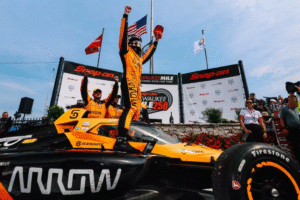
A etapa da NTT INDYCAR SERIES no Milwaukee Mile ficará marcada como uma das mais movimentadas da temporada de 2026. A rodada dupla, inicialmente planejada para acontecer ao longo do fim de semana, acabou concentrada em um domingo após a chuva interromper a primeira corrida. No fim, Pato O’Ward saiu como o grande vencedor esportivo, enquanto Alex Palou confirmou mais um título na categoria.
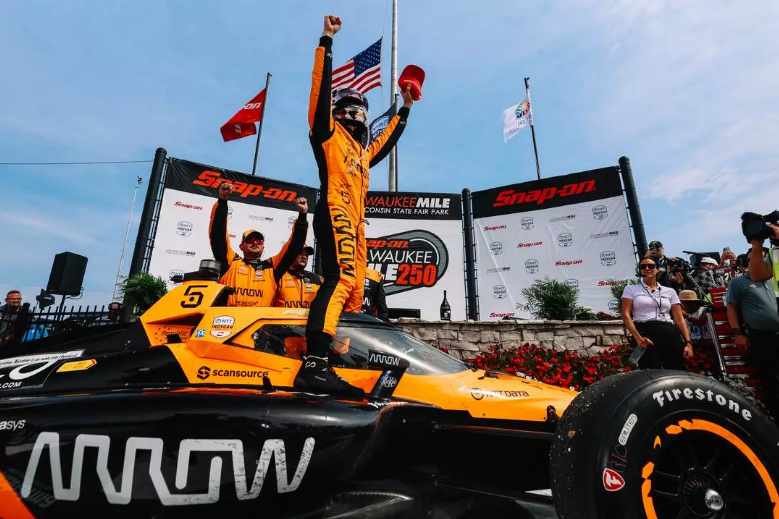
O mexicano da Arrow McLaren venceu as duas provas realizadas em Milwaukee e protagonizou um feito histórico: tornou-se o primeiro piloto desde Rick Mears, em 1981, a vencer duas corridas da IndyCar no mesmo dia.
Do outro lado, Palou adotou uma estratégia completamente diferente. Sem precisar buscar vitórias, o espanhol priorizou a consistência e os pontos necessários para confirmar matematicamente seu quinto campeonato na categoria, o quarto consecutivo.
Milwaukee novamente coloca a estratégia no centro da disputa
O Milwaukee Mile é um dos circuitos mais tradicionais do automobilismo norte-americano. Com apenas 1,015 milha de extensão, aproximadamente 1,63 km, e apenas nove graus de inclinação nas curvas, o oval apresenta características bastante diferentes das pistas de alta velocidade normalmente associadas à IndyCar.
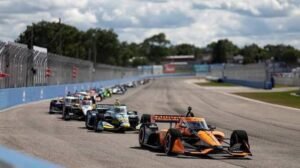
A pista curta faz com que os pilotos permaneçam constantemente próximos uns dos outros, enquanto o tráfego e o desgaste dos pneus têm grande influência no comportamento dos carros.
Em Milwaukee, não basta ser rápido em uma volta. É necessário encontrar um equilíbrio que permita manter ritmo durante longos períodos, administrar os pneus e aproveitar corretamente as relargadas.
E foi justamente nesse cenário que Pato O’Ward conseguiu se destacar.
A chuva transforma completamente a programação
O clima acabou sendo um dos principais protagonistas do fim de semana.
A primeira corrida precisou ser interrompida depois de 90 das 250 voltas previstas. Com a pista sem condições para a continuidade da prova, a direção de prova decidiu adiar a conclusão.
A situação criou uma programação incomum para a IndyCar. A segunda corrida foi realizada no domingo antes da conclusão da primeira, fazendo com que os pilotos e equipes enfrentassem uma verdadeira maratona.
Além da preparação dos carros, as equipes precisaram lidar com mudanças de estratégia, pneus, combustível e gerenciamento físico dos pilotos em um intervalo muito menor do que o habitual.
O resultado foi um domingo extremamente exigente.
Pato O’Ward transforma Milwaukee em seu território
Pato O’Ward foi o grande nome da etapa.
O piloto da Arrow McLaren conseguiu transformar sua velocidade em resultados concretos e venceu as duas corridas do fim de semana.
Mais importante do que simplesmente dominar a classificação final foi a maneira como O’Ward conduziu as provas.
Em um circuito tão curto, qualquer erro de posicionamento pode custar várias posições. O mexicano soube administrar o tráfego, aproveitar as oportunidades nas relargadas e manter um ritmo competitivo durante os diferentes estágios das corridas.
Na prova interrompida pela chuva, O’Ward liderou 119 voltas, enquanto David Malukas liderou 93. Os dois dominaram 212 das 250 voltas previstas.
A disputa mostrou que a vitória não foi consequência de uma corrida tranquila. Malukas tinha velocidade suficiente para vencer e pressionou O’Ward durante boa parte da prova.
David Malukas mostra velocidade, mas perde a oportunidade
David Malukas foi um dos grandes destaques de Milwaukee.
O piloto da Team Penske apresentou ritmo suficiente para disputar diretamente a vitória e chegou a liderar grande parte da corrida.
Entretanto, problemas relacionados ao comportamento do carro durante algumas relargadas e na saída dos boxes dificultaram sua corrida.
Em Milwaukee, esse tipo de problema tem um impacto ainda maior.
Como o circuito é curto, perder alguns décimos na aceleração pode significar a perda de várias posições antes mesmo da chegada à curva seguinte.
Malukas mostrou que tinha velocidade para vencer, mas não conseguiu transformar esse desempenho em uma vitória.
É justamente essa diferença entre ter um carro competitivo e conseguir executar uma corrida perfeita que marcou boa parte da etapa.
Rinus VeeKay também aparece entre os protagonistas
Outro destaque foi Rinus VeeKay.
O holandês terminou uma das provas na terceira posição e colocou a Juncos Hollinger Racing novamente em evidência.
O resultado reforçou a capacidade de VeeKay de aproveitar oportunidades quando encontra um carro competitivo.
Em uma etapa marcada por chuva, interrupções e diferentes estratégias, o piloto conseguiu manter-se longe dos principais problemas e aproveitar as circunstâncias para conquistar um importante resultado.
Alex Palou: quando terminar bem é mais importante do que vencer
Enquanto O’Ward e Malukas disputavam a vitória, Alex Palou estava envolvido em uma batalha completamente diferente.
O piloto da Chip Ganassi Racing chegou a Milwaukee sabendo que poderia conquistar matematicamente o campeonato.
Depois de um resultado complicado em Washington, Palou precisava apenas administrar sua vantagem para evitar que a disputa se prolongasse.
E foi exatamente o que fez.
Palou não venceu nenhuma das duas provas, mas conseguiu os resultados necessários para confirmar o título.
O espanhol terminou uma das corridas em quinto e a outra em décimo, resultados que, isoladamente, podem parecer modestos para um piloto acostumado a disputar vitórias.
No contexto do campeonato, entretanto, foram suficientes.
O quinto título de Alex Palou
Com os resultados de Milwaukee, Alex Palou confirmou matematicamente o campeonato da IndyCar de 2026.
Foi seu quinto título na categoria e o quarto consecutivo.
A conquista coloca Palou ainda mais próximo dos maiores campeões da história da IndyCar e consolida uma das sequências mais impressionantes da era moderna da categoria.
O título também representa uma característica que se tornou cada vez mais evidente em sua trajetória: consistência.
Palou não precisa necessariamente dominar todas as corridas para conquistar campeonatos. Sua capacidade de acumular resultados fortes e evitar grandes perdas de pontos permite que ele construa uma vantagem que, ao longo da temporada, torna-se extremamente difícil de recuperar.
Milwaukee foi um exemplo perfeito disso.
A diferença entre Palou e seus adversários
A etapa também mostrou como diferentes pilotos chegaram ao final da temporada com objetivos completamente distintos.
Palou podia administrar.
Seus principais adversários precisavam atacar.
Essa diferença de situação criou uma dinâmica interessante.
Enquanto pilotos como O’Ward buscavam vitórias para recuperar posições no campeonato, Palou podia adotar uma abordagem mais conservadora.
O espanhol não precisava correr riscos desnecessários.
Precisava apenas completar as provas e garantir os pontos necessários.
Essa capacidade de entender o momento do campeonato é uma das principais razões para o sucesso de Palou.
Arrow McLaren sai de Milwaukee fortalecida
Se Alex Palou foi o grande vencedor do campeonato, a Arrow McLaren foi a grande vencedora da etapa.
Duas corridas.
Duas vitórias.
Pato O’Ward conseguiu transformar um fim de semana caótico em uma demonstração de força da equipe.
O resultado também muda a perspectiva para a última etapa da temporada.
Depois de uma temporada com altos e baixos, O’Ward chega ao encerramento do campeonato com confiança renovada e em condições de disputar posições importantes na classificação final.
Mais do que os pontos, as duas vitórias demonstram que a Arrow McLaren encontrou um pacote competitivo em um momento importante do calendário.
Milwaukee também expõe os desafios da Team Penske
A Team Penske mostrou velocidade durante o fim de semana, mas não conseguiu converter seu desempenho em uma vitória.
Scott McLaughlin esteve entre os pilotos competitivos e conseguiu um resultado importante, enquanto Josef Newgarden também apareceu entre os protagonistas, embora tenha enfrentado dificuldades ao longo da programação.
O desempenho da equipe reforça uma característica importante da IndyCar: mesmo as equipes mais fortes precisam executar praticamente todos os detalhes de uma corrida para transformar velocidade em vitória.
Em um circuito tão curto, pequenos problemas podem ter consequências enormes.
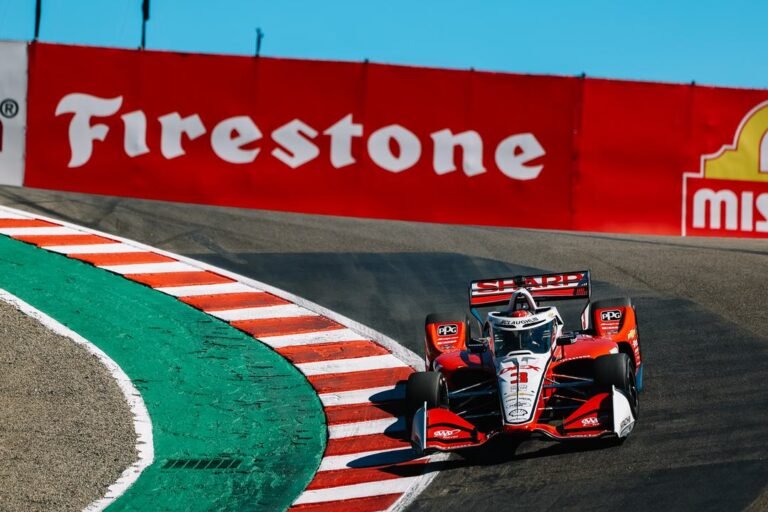
O que Milwaukee deixa para Laguna Seca?
Com o campeonato decidido, a última etapa da temporada ganha uma característica diferente.
Alex Palou chega a Laguna Seca sem a pressão de precisar conquistar pontos para garantir o título.
Isso pode permitir que o espanhol adote uma postura mais agressiva em busca de mais uma vitória.
E o histórico favorece Palou.
O piloto da Chip Ganassi Racing possui um desempenho extremamente forte em Laguna Seca e já venceu a prova em temporadas recentes.
Do outro lado, Pato O’Ward chega embalado pelas duas vitórias em Milwaukee.
O mexicano terá agora a oportunidade de encerrar a temporada em alta e transformar o desempenho da rodada dupla em um impulso para o próximo campeonato.
Uma etapa que resumiu a IndyCar
Milwaukee entregou praticamente todos os elementos que tornam a IndyCar uma categoria tão imprevisível.
A rodada dupla teve chuva, interrupção, mudanças de programação, disputas intensas, estratégias diferentes, problemas mecânicos e uma disputa pelo campeonato que terminou de maneira antecipada.
Mas, acima de tudo, a etapa mostrou duas maneiras diferentes de vencer.
Pato O’Ward venceu na pista.
Foi rápido, agressivo quando necessário e aproveitou as oportunidades para conquistar duas vitórias históricas no mesmo dia.
Alex Palou venceu o campeonato.
Mesmo sem terminar no topo das duas corridas, soube administrar sua vantagem, evitar riscos desnecessários e conquistar os pontos que precisava.
No final, os dois saíram de Milwaukee como protagonistas.
O’Ward levou os troféus.
Palou levou o campeonato.
E a IndyCar agora parte para Laguna Seca com o título definido, mas ainda com histórias importantes para serem encerradas antes da bandeirada final da temporada de 2026.
IndyCar at Milwaukee: O’Ward Dominates Doubleheader as Palou Secures Fifth Championship
The 2026 NTT INDYCAR SERIES round at the Milwaukee Mile will be remembered as one of the most eventful weekends of the season. The doubleheader, originally scheduled to take place throughout the weekend, was reshaped by rain that interrupted the first race. In the end, Pato O’Ward emerged as the biggest winner on track, while Alex Palou secured another championship in the series.
The Arrow McLaren driver won both races held in Milwaukee, achieving a historic feat: he became the first driver since Rick Mears in 1981 to win two IndyCar races on the same day.
On the other side, Palou took a completely different approach. With no need to chase victories, the Spaniard focused on consistency and scoring the points necessary to mathematically secure his fifth championship in the series and his fourth consecutive title.
Milwaukee puts strategy at the center of the battle once again
The Milwaukee Mile is one of the most traditional circuits in North American motorsports. At just 1.015 miles in length, approximately 1.63 kilometers, and with only nine degrees of banking in the corners, the oval presents characteristics that are quite different from the high-speed tracks normally associated with IndyCar.
The short track keeps drivers in close proximity throughout the race, while traffic and tire degradation play a major role in car performance.
At Milwaukee, being fast over a single lap is not enough. Drivers need to find a balance that allows them to maintain their pace over long runs, manage their tires and make the most of restarts.
And that was exactly where Pato O’Ward stood out.
Rain completely changes the schedule
Weather became one of the main protagonists of the weekend.
The first race had to be stopped after just 90 of the scheduled 250 laps. With the track conditions no longer suitable for racing, race control decided to postpone the remainder of the event.
That created an unusual schedule for IndyCar. The second race was held on Sunday before the conclusion of the first one, forcing drivers and teams into a true marathon.
In addition to preparing the cars, teams had to deal with changes in strategy, tires, fuel management and driver workload in a much shorter window than usual.
The result was an extremely demanding Sunday.
Pato O’Ward turns Milwaukee into his territory
Pato O’Ward was the standout driver of the weekend.
The Arrow McLaren driver managed to turn his speed into results, winning both races of the doubleheader.
More important than simply topping the final classification was the way O’Ward managed the races.
On such a short circuit, any mistake in positioning can cost several places. The Mexican driver managed traffic effectively, took advantage of restart opportunities and maintained a competitive pace throughout the different stages of the races.
In the race affected by rain, O’Ward led 119 laps, while David Malukas led 93. Together, the two drivers controlled 212 of the scheduled 250 laps.
That shows the victory was far from straightforward. Malukas had enough pace to win and challenged O’Ward for much of the race.
David Malukas shows winning pace but misses his opportunity
David Malukas was one of the major highlights of Milwaukee.
The Team Penske driver showed enough pace to fight directly for the victory and led a significant portion of the race.
However, issues related to the car’s performance during some restarts and while exiting the pits compromised his race.
At Milwaukee, that type of problem has an even greater impact.
Because the circuit is so short, losing just a few tenths during acceleration can mean losing several positions before reaching the next corner.
Malukas showed that he had the speed to win, but he was unable to turn that performance into victory.
That difference between having a competitive car and executing a perfect race was one of the defining themes of the weekend.
Rinus VeeKay also emerges as one of the protagonists
Another driver who deserves recognition is Rinus VeeKay.
The Dutchman finished one of the races in third place, putting Juncos Hollinger Racing back in the spotlight.
The result once again highlighted VeeKay’s ability to capitalize on opportunities when he has a competitive car underneath him.
On a weekend defined by rain, interruptions and different strategies, the driver managed to stay away from the biggest problems and take advantage of the circumstances to secure an important result.
Alex Palou: when finishing well matters more than winning
While O’Ward and Malukas fought for the victory, Alex Palou was involved in a completely different battle.
The Chip Ganassi Racing driver arrived in Milwaukee knowing that he could mathematically secure the championship.
After a difficult result in Washington, Palou needed to manage his advantage and prevent the title fight from continuing into the final round.
And that is exactly what he did.
Palou did not win either race, but he secured the results he needed to confirm the championship.
The Spaniard finished one race fifth and the other tenth, results that may look modest on their own for a driver accustomed to fighting for victories.
In the context of the championship, however, they were enough.
Alex Palou’s fifth championship
With the Milwaukee results, Alex Palou mathematically secured the 2026 IndyCar championship.
It was his fifth title in the series and his fourth consecutive championship.
The achievement places Palou even closer to the greatest champions in IndyCar history and reinforces one of the most impressive championship runs of the modern era.
The title also highlights a defining characteristic of Palou’s career: consistency.
He does not necessarily need to dominate every race to win championships. His ability to consistently collect strong results while avoiding major points losses allows him to build an advantage that becomes extremely difficult for his rivals to overcome.
Milwaukee was a perfect example of that approach.
The difference between Palou and his rivals
The Milwaukee round also showed how differently the drivers approached the final stages of the season.
Palou could manage.
His main rivals needed to attack.
That difference created an interesting dynamic.
While drivers such as O’Ward were looking for victories to improve their championship positions, Palou could take a more conservative approach.
The Spaniard did not need to take unnecessary risks.
He simply needed to finish the races and score the points required.
Understanding the moment of the championship has become one of Palou’s greatest strengths.
Arrow McLaren leaves Milwaukee stronger
If Alex Palou was the biggest winner of the championship, Arrow McLaren was the biggest winner of the weekend.
Two races.
Two victories.
Pato O’Ward turned a chaotic weekend into a dominant performance for the team.
The result also changes the outlook for the final round of the season.
After a year of ups and downs, O’Ward heads into the season finale with renewed confidence and an opportunity to fight for an important position in the final championship standings.
More than just the points, the two victories demonstrate that Arrow McLaren found a competitive package at a crucial point in the calendar.
Milwaukee also exposes Team Penske’s challenges
Team Penske showed strong pace throughout the weekend but was unable to convert its performance into a victory.
Scott McLaughlin remained among the competitive drivers and secured an important result, while Josef Newgarden was also among the protagonists, although he faced difficulties during Sunday’s schedule.
The team’s performance reinforces an important IndyCar reality: even the strongest teams need to execute virtually every detail of a race in order to turn speed into victory.
On such a short oval, small problems can have enormous consequences.
What does Milwaukee leave us with for Laguna Seca?
With the championship decided, the final round of the season takes on a different character.
Alex Palou arrives at Laguna Seca without the pressure of needing points to secure the title.
That could allow the Spaniard to take a more aggressive approach in search of another victory.
And his history at the circuit is encouraging.
The Chip Ganassi Racing driver has been extremely strong at Laguna Seca and has won the race in recent seasons.
On the other side, Pato O’Ward arrives full of momentum after his double victory in Milwaukee.
The Mexican driver now has the opportunity to close the season on a high and turn the momentum from the doubleheader into confidence heading into the next championship.
A weekend that summed up IndyCar
Milwaukee delivered virtually every element that makes IndyCar so unpredictable.
The doubleheader featured rain, an interruption, schedule changes, intense battles, different strategies, mechanical issues and a championship fight that came to an early conclusion.
But above all, the round demonstrated two different ways of winning.
Pato O’Ward won on the track.
He was fast, aggressive when necessary and took advantage of every opportunity to secure two historic victories on the same day.
Alex Palou won the championship.
Even without finishing at the top in either race, he managed his advantage, avoided unnecessary risks and collected the points he needed.
In the end, both left Milwaukee as protagonists.
O’Ward took the trophies.
Palou took the championship.
And IndyCar now heads to Laguna Seca with the title decided, but with important stories still to be concluded before the final checkered flag of the 2026 season.
Por: Ana Elisa
@ana_arquiteturaevelocidade
Tradução: Autoral
Informações/dados: Indycar