Daytona mais uma vez entregou aquilo que a NASCAR costuma prometer quando chega ao seu principal superspeedway: estratégia, tensão, acidentes e uma decisão que só aconteceu nos últimos metros.
Na noite de 29 de agosto, a Coke Zero Sugar 400 encerrou a temporada regular da NASCAR Cup Series e definiu os 16 pilotos que disputarão o Chase de 2026. E o grande protagonista foi Ryan Preece.
O piloto da RFK Racing não apenas conquistou sua primeira vitória em uma corrida válida pelo campeonato da Cup Series. Preece também saiu de Daytona com a última vaga no Chase, depois de superar Shane van Gisbergen em uma disputa que começou antes mesmo da bandeira verde e terminou literalmente na última volta.
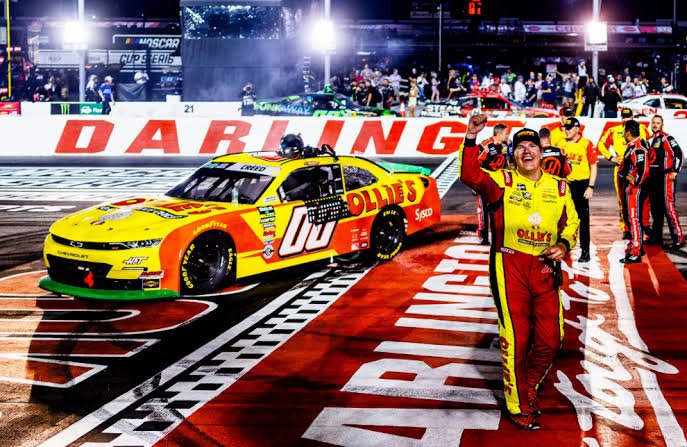
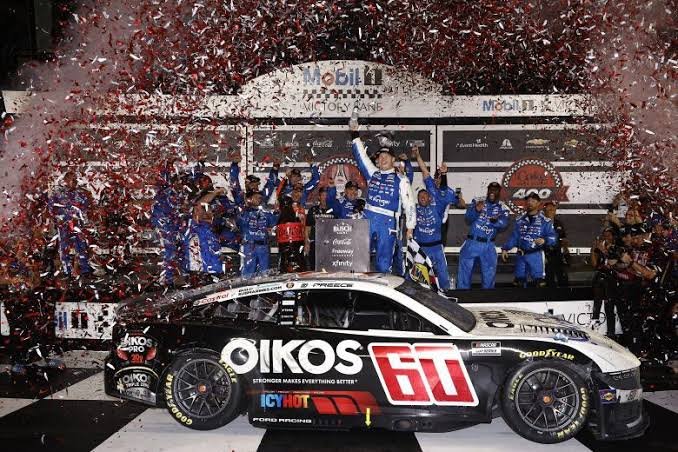
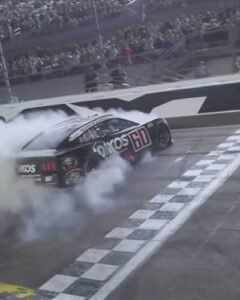
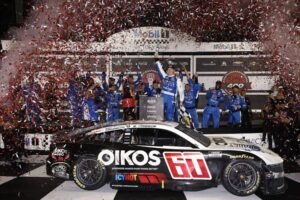
Preece cruzou a linha sob bandeira amarela depois de uma sequência caótica de acidentes no overtime, garantindo uma vitória histórica para sua carreira e para a RFK Racing.
Uma vitória que começou antes da bandeira verde
Preece chegou a Daytona precisando descontar 31 pontos para Shane van Gisbergen, que ocupava a 16ª e última posição de classificação para o Chase.
Em uma corrida normal, recuperar essa diferença seria extremamente difícil. Em Daytona, porém, tudo muda.
O sistema de pontuação, os pontos das etapas, a possibilidade de vitória e, principalmente, a imprevisibilidade dos superspeedways fizeram com que o duelo permanecesse aberto durante toda a noite.
A situação ficou ainda mais dramática porque os dois pilotos tiveram momentos distintos durante a corrida.
Van Gisbergen começou forte e venceu a primeira etapa. Preece, por outro lado, esteve envolvido no acidente que encerrou o Stage 1, quando Chris Buescher, Kyle Larson e o próprio piloto da RFK Racing se envolveram em um incidente na aproximação da linha de chegada.
Mesmo com danos no carro, Preece conseguiu continuar.
E esse talvez tenha sido o primeiro grande ponto de virada da noite.
Van Gisbergen começa na frente
O piloto da Trackhouse Racing tinha chegado a Daytona com uma vantagem confortável sobre Preece e conseguiu ampliar momentaneamente sua posição ao conquistar a vitória no primeiro estágio.
Van Gisbergen mostrou novamente sua evolução nos superspeedways e conseguiu vencer sua primeira etapa em um oval na temporada.
Mas o problema de Daytona não era apenas velocidade.
Era sobreviver.
Preece terminou o primeiro estágio ainda próximo do rival e conseguiu recuperar terreno durante a segunda parte da prova.
Enquanto isso, Ryan Blaney venceu o Stage 2, em uma disputa que também envolveu Chase Elliott. Preece terminou em segundo, somando pontos importantes para a batalha pelo Chase.
A partir daquele momento, a corrida passou a ser praticamente uma disputa estratégica entre Preece, van Gisbergen e Austin Cindric, que também estava envolvido na briga pela classificação.
O combustível virou protagonista
A grande decisão da corrida aconteceu na parte final.
Com o consumo de combustível sendo determinante, diferentes equipes adotaram estratégias distintas para tentar chegar ao final sem uma parada adicional.
Preece e a RFK Racing decidiram apostar na economia de combustível.
O No. 60 conseguiu permanecer na pista enquanto outros pilotos precisavam administrar suas reservas ou visitar os boxes.
Foi uma estratégia arriscada, mas que colocou Preece na disputa pela vitória.
Na parte final, o piloto chegou a assumir a liderança ao ultrapassar Zane Smith, depois de trabalhar no vácuo e utilizar a força do Ford da RFK Racing.
A estratégia estava funcionando.
Mas Daytona ainda tinha uma última surpresa preparada.
O acidente de Carson Hocevar muda tudo
Quando faltavam poucos giros para o final da distância regulamentar, Carson Hocevar tentou uma movimentação agressiva na entrada da Curva 3.
O Chevrolet perdeu estabilidade e Hocevar acabou atingindo o muro externo.
Erik Jones também acabou envolvido, assim como Ty Gibbs.
O acidente provocou uma longa bandeira amarela e obrigou a NASCAR a levar a corrida para o overtime.
E aqui está um dos pontos mais importantes da análise.
A bandeira amarela durou nove voltas, quatro delas já além da distância originalmente programada. Posteriormente, a própria NASCAR reconheceu que uma bandeira vermelha poderia ter sido utilizada para acelerar a limpeza da pista e evitar uma extensão tão longa da cautela.
O problema era simples: quanto mais voltas sob bandeira amarela, maior o consumo de combustível.
E isso afetava diretamente as estratégias dos pilotos.
A decisão que praticamente eliminou van Gisbergen
A situação de Shane van Gisbergen ficou ainda mais complicada.
Com o combustível no limite, a equipe Trackhouse decidiu levar o Chevrolet No. 97 aos boxes no momento da cautela para colocar combustível e quatro pneus novos.
A decisão fazia sentido do ponto de vista estratégico.
Se a corrida terminasse em uma bandeira verde prolongada, van Gisbergen provavelmente teria problemas para chegar ao final.
O problema foi a posição de pista.
Ao retornar à pista, o neozelandês ficou apenas em 27º lugar para o reinício do overtime.
Preece, ao contrário, estava na primeira fila.
A diferença de estratégia acabou sendo decisiva.
Van Gisbergen precisava recuperar posições rapidamente.
Preece precisava apenas permanecer à frente.
O overtime que decidiu o Chase
A corrida originalmente tinha 160 voltas, mas terminou seis voltas além da distância programada.
No reinício, Zane Smith assumiu a liderança e Preece ficou próximo.
No momento decisivo, Preece conseguiu ultrapassar Smith.
Atrás deles, entretanto, a confusão começou novamente.
Na última volta, Tyler Reddick tentou avançar pelo lado externo e acabou entrando em contato com Zane Smith.
O incidente provocou uma enorme sequência de acidentes no pelotão.
Preece conseguiu escapar da confusão.
A bandeira amarela foi acionada e, naquele momento, o piloto do No. 60 já estava à frente.
Não havia mais corrida para disputar.
Era a vitória.
Ryan Preece: primeira vitória e primeira classificação para o Chase
O triunfo encerrou uma espera importante na carreira de Preece.
Foi sua primeira vitória em uma corrida válida pelo campeonato da NASCAR Cup Series.
Mais importante ainda: a vitória veio justamente quando ele precisava de uma atuação extraordinária para entrar no Chase.
Preece terminou a noite com 67 pontos, enquanto van Gisbergen somou apenas 19.
A diferença final entre os dois foi de 17 pontos a favor de Preece.
O cenário que parecia improvável antes da corrida se tornou realidade.
Preece entrou em Daytona precisando recuperar 31 pontos.
Saiu de Daytona com uma vitória, 67 pontos e a 16ª posição do Chase.
É difícil imaginar uma maneira mais dramática de entrar na disputa pelo campeonato.
Shane van Gisbergen: uma eliminação dolorosa
Se Preece teve uma das melhores noites de sua carreira, van Gisbergen teve exatamente o oposto.
O piloto da Trackhouse chegou à última corrida da temporada regular controlando a situação.
Além da vantagem de 31 pontos, ele começou a corrida vencendo o primeiro estágio.
Durante boa parte da noite, parecia que a classificação estava sob controle.
Mas Daytona não perdoa.
A necessidade de economizar combustível, a cautela prolongada e a decisão de fazer uma parada no fim colocaram van Gisbergen no meio do pelotão.
Ele ainda tinha uma chance matemática.
Porém, largando em 27º no overtime, precisava atravessar um pelotão inteiro em poucas voltas.
No acidente da última volta, acabou também envolvido.
Resultado: 28º lugar e eliminação do Chase por apenas 17 pontos.
É uma das maiores demonstrações de como uma temporada inteira pode ser definida em poucos minutos na NASCAR.
Daniel Suárez confirma crescimento
Um dos grandes destaques positivos da corrida foi Daniel Suárez.
O piloto da Spire Motorsports terminou em segundo lugar, repetindo uma posição que já havia alcançado anteriormente em Daytona.
Mais importante do que o resultado isolado foi o significado para sua temporada.
Suárez conseguiu garantir sua presença no Chase e mostrou que a Spire Motorsports chega à fase decisiva com condições de competir.
O desempenho em Daytona também foi importante para a confiança da equipe.
Tyler Reddick novamente entre os protagonistas
Reddick terminou em terceiro e voltou a mostrar por que é um dos principais candidatos ao título.
O piloto da 23XI Racing teve uma temporada extremamente consistente e chega ao Chase como terceiro colocado na classificação inicial.
A atuação em Daytona poderia ter terminado em vitória, mas o contato com Zane Smith na última volta acabou eliminando essa possibilidade.
Ainda assim, terminar no pódio em um superspeedway na última corrida da temporada regular é um resultado importante.
Reddick começa o Chase com uma das posições mais fortes do grid.
Michael McDowell e Ricky Stenhouse Jr. completam o top 5
Michael McDowell terminou em quarto, enquanto Ricky Stenhouse Jr. ficou em quinto.
Os dois pilotos tiveram atuações importantes em uma corrida na qual experiência em superspeedway voltou a ser um diferencial.
Stenhouse, particularmente, é um nome que tradicionalmente aparece entre os protagonistas de Daytona e Talladega.
Mesmo fora da disputa pelo Chase, o resultado reforçou sua capacidade de competir na frente em pistas de drafting.
Austin Cindric também sobreviveu
Austin Cindric terminou em sexto e garantiu a classificação para o Chase.
O piloto da Team Penske entrou em Daytona sob pressão, mas conseguiu administrar a situação.
Cindric terminou apenas nove pontos à frente de Ryan Preece na disputa pela 15ª posição, enquanto Preece ficou com a 16ª vaga.
A situação mostra como cada ponto conquistado ao longo da temporada regular pode ser decisivo.
Os dez primeiros em Daytona
Ryan Preece venceu, seguido por:
- Ryan Preece
- Daniel Suárez
- Tyler Reddick
- Michael McDowell
- Ricky Stenhouse Jr.
- Austin Cindric
- Austin Dillon
- Alex Bowman
- Josh Berry
- Cole Custer
Josh Berry merece destaque especial por conquistar seu quinto top-10 consecutivo.
O impacto do novo Chase
Daytona também foi a primeira grande prova prática do novo formato do Chase.
A temporada de 2026 marcou o retorno do sistema de Chase da NASCAR, agora com uma estrutura modificada em relação ao formato utilizado anteriormente.
São 16 pilotos classificados para a disputa pelo título.
E Daytona mostrou exatamente por que a NASCAR decidiu manter uma vaga extremamente competitiva até a última corrida da temporada regular.
Preece não precisava apenas de consistência.
Ele precisava de uma atuação extraordinária.
E conseguiu.
A vitória também mostra que o novo sistema pode produzir situações em que um piloto chega à última corrida fora da zona de classificação e consegue transformar completamente sua temporada em uma única noite.
Quem chega mais forte ao Chase?
A classificação inicial coloca Denny Hamlin na primeira posição.
Hamlin inicia o Chase com 2.100 pontos, depois de garantir a liderança geral na semana anterior, em New Hampshire.
Ryan Blaney começa em segundo, com 2.075 pontos.
Depois aparecem:
- Tyler Reddick
- Ty Gibbs
- Chase Briscoe
- Christopher Bell
- Kyle Larson
- Chase Elliott
- Joey Logano
- Chris Buescher
- Daniel Suárez
- Carson Hocevar
- William Byron
- Bubba Wallace
- Austin Cindric
- Ryan Preece
A grande questão agora é se a regularidade demonstrada durante as 26 corridas continuará sendo suficiente quando os pilotos entrarem em uma fase na qual cada erro terá um peso ainda maior.
Daytona mostrou duas NASCARs diferentes
A corrida também deixa uma conclusão interessante sobre o pacote técnico utilizado nos superspeedways.
O comportamento dos carros permitiu que os pilotos buscassem diferentes linhas e realizassem movimentações ao longo do pelotão, evitando que a corrida se transformasse simplesmente em um comboio.
A própria análise especializada destacou que o novo pacote parece ter contribuído para uma competição mais movimentada em Daytona, com possibilidade de ataques em diferentes pontos do circuito.
Ainda existe uma dependência enorme do vácuo e dos parceiros de fila, característica natural desse tipo de pista.
Mas a prova apresentou uma combinação interessante entre velocidade, estratégia e gerenciamento de combustível.
O grande vencedor foi a estratégia
Embora Ryan Preece tenha sido o nome da noite, a vitória não pode ser explicada apenas pela velocidade.
O triunfo foi resultado de uma combinação de fatores:
- Recuperação após o acidente do Stage 1
Preece conseguiu continuar competitivo mesmo depois de passar pela grama e sofrer danos.
- Pontuação no Stage 2
O segundo lugar no segundo estágio foi fundamental para diminuir o prejuízo da primeira parte da prova.
- Economia de combustível
A decisão da RFK Racing de permanecer na pista colocou Preece em posição privilegiada no final.
- Velocidade do Ford
O carro conseguiu permanecer competitivo no tráfego e trabalhar bem no vácuo.
- Sobrevivência
Em Daytona, chegar inteiro ao final é uma estratégia por si só.
- Posicionamento no overtime
Preece estava na frente quando a corrida foi reiniciada, enquanto van Gisbergen precisou recuperar posições do fundo do pelotão.
Uma noite que muda a temporada da RFK Racing
A vitória também representa muito para a RFK Racing.
A equipe vinha buscando uma vitória na temporada de 2026 e finalmente encontrou o resultado justamente no momento mais importante da fase regular.
Além disso, Preece se junta a Chris Buescher no Chase, garantindo duas entradas da organização na disputa pelo campeonato.
Para Brad Keselowski, coproprietário da equipe, o resultado também representa a recompensa pelo trabalho desenvolvido ao longo da temporada.
Mais do que uma vitória, Daytona entregou à RFK Racing um momento de afirmação.
E agora começa o Chase
Com a temporada regular encerrada, a NASCAR Cup Series muda completamente de cenário.
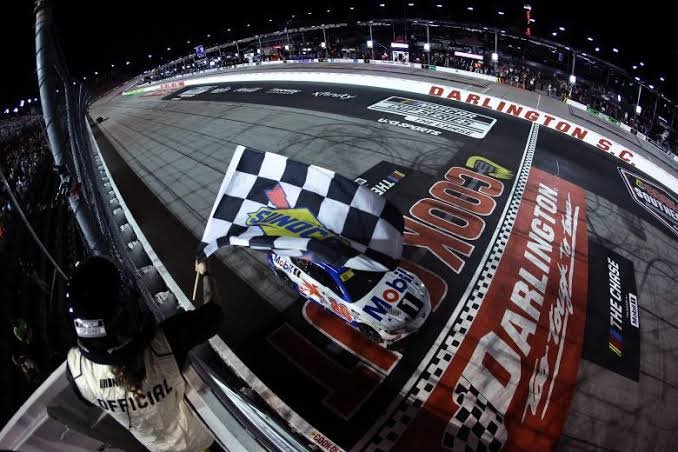
A próxima etapa será o Cook Out Southern 500, em Darlington Raceway, no dia 6 de setembro.
E se Daytona foi uma corrida de sobrevivência, Darlington será um teste completamente diferente.
O desgaste dos pneus, a dificuldade de ultrapassagem, a proximidade do muro e a necessidade de administrar o carro durante longos períodos devem colocar em evidência pilotos com características muito diferentes das exigidas em um superspeedway.
É justamente por isso que o resultado de Daytona não deve ser interpretado como uma previsão direta do campeonato.
Preece chega embalado pela vitória.
Reddick chega entre os favoritos.
Hamlin começa na liderança.
Blaney vem logo atrás.
Larson, Elliott, Bell, Byron e outros nomes de peso também estão na disputa.
Mas agora começa uma nova temporada dentro da temporada.
Conclusão
A Coke Zero Sugar 400 de 2026 foi uma das corridas mais importantes do calendário.
Não apenas pela vitória de Ryan Preece, mas porque Daytona conseguiu condensar em poucas horas tudo aquilo que torna a NASCAR diferente: estratégia, imprevisibilidade, trabalho de equipe, gerenciamento de combustível, acidentes e decisões tomadas em frações de segundo.
Preece chegou à pista precisando de uma recuperação quase improvável.
Saiu como vencedor e último classificado para o Chase.
Van Gisbergen, que começou a noite com 31 pontos de vantagem, terminou eliminado.
Zane Smith esteve a poucos metros de conquistar uma vitória que mudaria completamente a classificação.
Tyler Reddick ficou perto de mais um triunfo.
E Daniel Suárez confirmou sua presença entre os 16 candidatos ao título.
No fim, Daytona entregou exatamente o que uma decisão de temporada regular deveria entregar: um vencedor improvável, um eliminado de forma dolorosa e um Chase começando com absolutamente tudo em aberto.
Ryan Preece Turns Daytona Into a Night of Redemption and Secures the Final Chase Spot
Daytona once again delivered everything NASCAR fans have come to expect from a superspeedway race: strategy, tension, crashes, and a championship battle that was decided in the final moments.
On August 29, the Coke Zero Sugar 400 brought the 2026 NASCAR Cup Series regular season to a dramatic conclusion and determined the 16 drivers who will compete in the Chase.
And the biggest story of the night was Ryan Preece.
The RFK Racing driver not only earned the first points-paying NASCAR Cup Series victory of his career, but also secured the final spot in the Chase after an intense battle with Shane van Gisbergen that lasted throughout the night and ultimately came down to the final lap.
Preece crossed the finish line under caution after a chaotic overtime sequence, securing a historic victory for both himself and RFK Racing.
A Victory That Started Before the Green Flag
Preece arrived at Daytona needing to make up 31 points on Shane van Gisbergen, who occupied the 16th and final Chase position.
Under normal circumstances, recovering that deficit would have been extremely difficult.
At Daytona, however, everything changes.
The stage points, the possibility of winning the race, and the unpredictable nature of superspeedway racing meant that the battle remained open throughout the night.
The situation became even more dramatic when the two drivers experienced very different moments during the race.
Van Gisbergen started strongly and won Stage 1.
Preece, meanwhile, was involved in the crash that ended the first stage when Chris Buescher, Kyle Larson and the RFK Racing driver were caught up in an incident approaching the stage finish.
Despite suffering damage, Preece managed to continue.
That was arguably the first major turning point of the night.
Van Gisbergen Starts on the Front Foot
The Trackhouse Racing driver arrived at Daytona with a comfortable advantage over Preece and temporarily extended his position by winning the opening stage.
Van Gisbergen once again demonstrated his growing confidence on superspeedways, earning his first stage victory on an oval during the 2026 season.
But Daytona is not only about speed.
It is about survival.
Preece remained close to his rival and gradually recovered ground during the second stage.
Meanwhile, Ryan Blaney won Stage 2 in a battle that also featured Chase Elliott.
Preece finished second, collecting crucial points in the Chase race.
From that moment on, the event increasingly became a strategic battle involving Preece, van Gisbergen and Austin Cindric, who was also fighting for a place in the championship field.
Fuel Strategy Becomes a Major Factor
The biggest strategic decision came during the closing stages.
With fuel consumption becoming increasingly important, teams adopted different approaches to try to reach the finish without another pit stop.
Preece and RFK Racing decided to gamble on fuel conservation.
The No. 60 Ford remained on track while other drivers either had to manage their fuel carefully or make additional pit stops.
It was a risky strategy, but it put Preece in position to fight for the victory.
Late in the race, Preece moved into the lead after passing Zane Smith, using the draft and the strength of the RFK Racing Ford.
The strategy was working.
But Daytona still had one final surprise waiting.
Carson Hocevar’s Crash Changes Everything
With only a few laps remaining in the scheduled distance, Carson Hocevar made an aggressive move entering Turn 3.
His Chevrolet lost stability and Hocevar hit the outside wall.
Erik Jones was also involved, along with Ty Gibbs.
The crash brought out a lengthy caution and ultimately forced the race into overtime.
This became one of the most important moments of the race.
The caution lasted nine laps, including four laps beyond the scheduled distance. NASCAR later acknowledged that a red flag could have been used to speed up the cleanup and potentially avoid such a long caution period.
The longer the caution lasted, the more fuel the cars continued to consume.
And that directly affected the strategies of the teams involved.
The Decision That Put Van Gisbergen in Trouble
Shane van Gisbergen’s situation became even more complicated.
With his fuel situation becoming critical, the Trackhouse team elected to bring the No. 97 Chevrolet to pit road during the caution for fuel and four fresh tires.
From a strategic standpoint, the decision made sense.
If the overtime went green for an extended period, van Gisbergen could have struggled to reach the finish.
The problem was track position.
When he returned to the track, the New Zealander was only 27th for the overtime restart.
Preece, meanwhile, was positioned near the front.
The two strategies had produced completely different scenarios.
Van Gisbergen needed to pass a large portion of the field.
Preece simply needed to stay ahead.
The Overtime That Decided the Chase
The race was originally scheduled for 160 laps, but it ultimately finished six laps beyond the scheduled distance.
Zane Smith took the lead at the restart, with Preece close behind.
When the decisive moment arrived, Preece managed to move past Smith.
Behind them, however, chaos erupted once again.
On the final lap, Tyler Reddick attempted to move around the outside and made contact with Zane Smith.
The incident triggered a massive multi-car crash throughout the field.
Preece avoided the wreck.
The caution came out, and the No. 60 Ford was already ahead.
There would be no further green-flag racing.
Ryan Preece had won.
Ryan Preece: First Win and First Chase Appearance
The victory ended an important wait in Preece’s career.
It was his first points-paying NASCAR Cup Series victory.
More importantly, it came at exactly the moment when he needed an extraordinary performance to make the Chase.
Preece scored 67 points, while van Gisbergen collected just 19.
The final difference between the two drivers was 17 points in Preece’s favor.
Preece arrived at Daytona needing to recover 31 points.
He left with a victory, 67 points and the 16th and final Chase position.
It is difficult to imagine a more dramatic way to enter the championship fight.
Shane van Gisbergen: A Painful Elimination
While Preece experienced one of the best nights of his career, van Gisbergen experienced the opposite.
The Trackhouse driver arrived at Daytona controlling his own destiny.
With a 31-point advantage over Preece and a Stage 1 victory, the situation appeared to be firmly in his favor.
For much of the night, it looked as though the Chase position was under control.
But Daytona rarely follows the script.
Fuel conservation, the extended caution and the decision to pit late ultimately placed van Gisbergen deep in the field.
He still had a mathematical opportunity.
But restarting 27th in overtime meant he needed to pass a large number of cars in only a handful of laps.
The final-lap crash ended his chances.
Van Gisbergen finished 28th and missed the Chase by just 17 points.
It was another reminder that an entire regular season can be decided in a matter of minutes at a NASCAR superspeedway.
Daniel Suárez Confirms His Progress
One of the biggest positive stories of the night was Daniel Suárez.
The Spire Motorsports driver finished second, matching his previous Daytona runner-up result.
More importantly, the result confirmed his progress throughout the 2026 season.
Suárez successfully secured his place in the Chase and showed that Spire Motorsports enters the championship battle with legitimate competitive potential.
His Daytona performance should also provide significant momentum heading into the playoffs.
Tyler Reddick Again Among the Contenders
Reddick finished third and once again demonstrated why he is considered one of the leading championship contenders.
The 23XI Racing driver has been one of the most consistent performers throughout the season and enters the Chase as the third seed.
The Daytona race could easily have ended with another victory for Reddick, but his late contact with Zane Smith eliminated that possibility.
Even so, a podium finish at a superspeedway in the final race of the regular season is an important result.
Reddick begins the Chase in one of the strongest positions in the field.
McDowell and Stenhouse Complete the Top Five
Michael McDowell finished fourth, while Ricky Stenhouse Jr. rounded out the top five.
Both drivers delivered strong performances in a race where superspeedway experience once again proved valuable.
Stenhouse, in particular, remains one of the drivers most frequently found at the front at Daytona and Talladega.
Even without a Chase position on the line, his fifth-place finish reinforced his ability to compete for victories on drafting tracks.
Austin Cindric Survives the Cut
Austin Cindric finished sixth and secured his place in the Chase.
The Team Penske driver arrived at Daytona under pressure but managed to control the situation.
Cindric finished just nine points ahead of Ryan Preece in the battle for the 15th position, while Preece ultimately took the final Chase spot.
The situation demonstrates how every point accumulated throughout the regular season can become critical when the field reaches the final cutoff.
Daytona’s Top 10
Ryan Preece took the victory, followed by:
- Ryan Preece
- Daniel Suárez
- Tyler Reddick
- Michael McDowell
- Ricky Stenhouse Jr.
- Austin Cindric
- Austin Dillon
- Alex Bowman
- Josh Berry
- Cole Custer
Josh Berry deserves special recognition for recording his fifth consecutive top-10 finish.
The Impact of the New Chase
Daytona also provided the first major test of NASCAR’s new Chase format.
The 2026 season marked the return of the Chase system, with a modified structure compared with the format used in previous years.
Sixteen drivers qualified for the championship battle.
Daytona demonstrated exactly why keeping a highly competitive final qualification race can create so much drama.
Preece did not simply need consistency.
He needed an exceptional performance.
And he delivered.
His victory also demonstrated how the new system can create situations in which a driver outside the qualification zone before the final regular-season race can completely transform his season in a single night.
Who Enters the Chase in the Strongest Position?
Denny Hamlin enters the Chase at the top of the standings.
Hamlin begins the championship battle with 2,100 points, after securing the regular-season lead the previous week at New Hampshire.
Ryan Blaney starts second with 2,075 points.
They are followed by:
- Tyler Reddick
- Ty Gibbs
- Chase Briscoe
- Christopher Bell
- Kyle Larson
- Chase Elliott
- Joey Logano
- Chris Buescher
- Daniel Suárez
- Carson Hocevar
- William Byron
- Bubba Wallace
- Austin Cindric
- Ryan Preece
The major question now is whether the consistency shown throughout the regular season will continue to be enough when the championship battle enters a phase in which every mistake carries significantly greater consequences.
Daytona Revealed Two Different NASCARs
The race also offered an interesting look at the current superspeedway package.
The cars allowed drivers to explore different lines and make moves throughout the field, preventing the race from becoming simply a single-file procession.
The combination of drafting, tire management and fuel strategy created several different ways to approach the final stages.
There is still an unavoidable dependence on the draft and on having the right partners in the lanes, which is a natural characteristic of superspeedway racing.
But Daytona once again showed an interesting combination of speed, strategy and fuel management.
The Biggest Winner Was Strategy
Although Ryan Preece was undoubtedly the star of the night, the victory cannot be explained by speed alone.
It was the result of several factors coming together:
- Recovery after the Stage 1 crash
Preece remained competitive despite going through the grass and suffering damage.
- Stage 2 points
His second-place finish in the second stage was crucial in reducing the deficit to van Gisbergen.
- Fuel conservation
RFK Racing’s decision to remain on track put Preece in a strong position for the final stages.
- Ford’s speed
The car remained competitive in traffic and worked effectively in the draft.
- Survival
At Daytona, simply reaching the finish with an undamaged car can be a strategy in itself.
- Overtime track position
Preece was positioned near the front for the final restart, while van Gisbergen had to recover from the back of the field.
A Season-Changing Night for RFK Racing
The victory also means a great deal to RFK Racing.
The team had been searching for a victory during the 2026 season and finally found it at the most important moment of the regular season.
Preece also joins Chris Buescher in the Chase, giving the organization two drivers in the championship battle.
For RFK Racing, Daytona was more than a victory.
It was a statement.
Now the Chase Begins
With the regular season complete, the NASCAR Cup Series enters a completely different phase.
The next race will be the Cook Out Southern 500 at Darlington Raceway on September 6.
And if Daytona was a race about survival, Darlington will provide a completely different test.
Tire wear, the difficulty of passing, the proximity of the walls and the need to manage the car over long runs will place the emphasis on drivers with very different strengths from those required at a superspeedway.
That is precisely why Daytona’s result should not be interpreted as a direct prediction of the championship.
Preece arrives with momentum.
Reddick enters among the favorites.
Hamlin starts as the points leader.
Blaney follows closely behind.
Larson, Elliott, Bell, Byron and several other championship-caliber drivers are also in contention.
Now, a new season begins within the season.
Conclusion
The 2026 Coke Zero Sugar 400 was one of the most important races on the NASCAR Cup Series calendar.
Not simply because Ryan Preece won, but because Daytona once again condensed everything that makes NASCAR unique: strategy, unpredictability, teamwork, fuel management, crashes and decisions made in fractions of a second.
Preece arrived needing an almost improbable comeback.
He left as the winner and the final Chase qualifier.
Van Gisbergen began the night with a 31-point advantage and ended it outside the championship field.
Zane Smith came within a few meters of a victory that could have completely changed the standings.
Tyler Reddick was once again fighting at the front.
And Daniel Suárez confirmed his place among the 16 championship contenders.
In the end, Daytona delivered exactly what a regular-season finale should deliver: an unlikely winner, a heartbreaking elimination and a Chase that begins with everything still wide open.
Por: Ana Elisa
@ana_arquiteturaevelocidade
Tradução: Autoral
Informações/dados: Nascar