Larson vence em dose dupla de overtime, supera Joey Logano e coloca fogo na disputa pelo Chase após uma das corridas mais caóticas da temporada
A segunda etapa do Chase da NASCAR Cup Series 2026, realizada no World Wide Technology Raceway at Gateway, entregou uma corrida que resumiu tudo o que torna a NASCAR imprevisível. Entre acidentes, problemas mecânicos, 18 bandeiras amarelas, duas bandeiras vermelhas e dois períodos de overtime, Kyle Larson finalmente voltou ao Victory Lane.
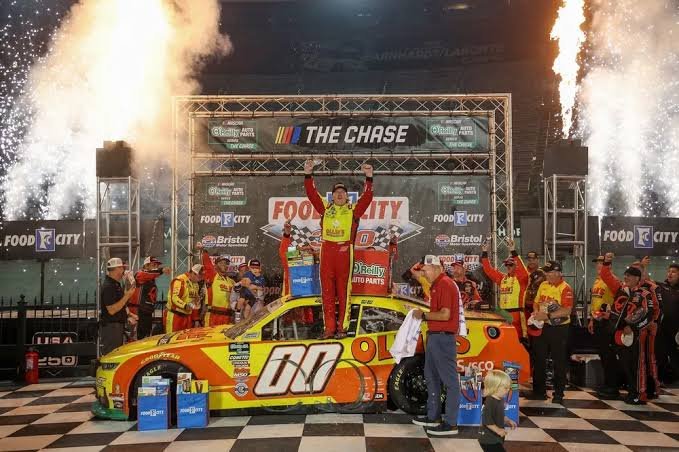
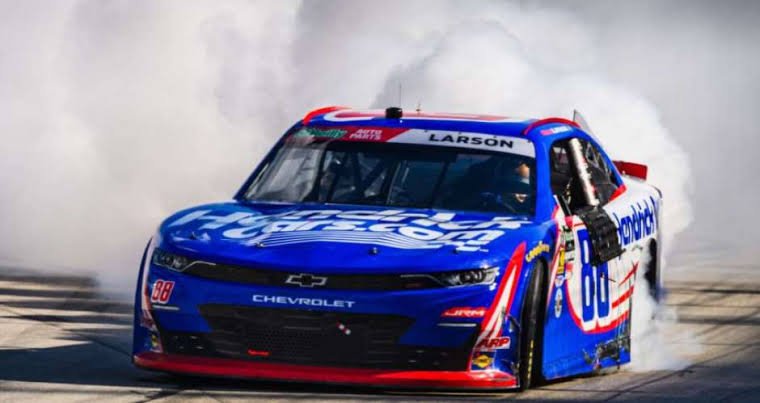
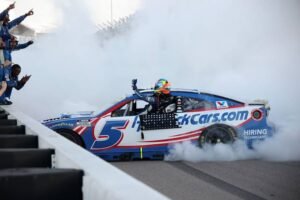
O piloto da Hendrick Motorsports venceu a Enjoy Illinois 300 após 247 voltas e encerrou uma sequência de 51 corridas sem vitória, conquistando seu primeiro triunfo desde Kansas, em maio de 2025. Foi também a 33ª vitória de Larson na Cup Series e sua primeira no circuito de Gateway.
Mais do que interromper um longo jejum, o resultado teve impacto direto no campeonato. Larson ganhou cinco posições na classificação do Chase e terminou o fim de semana em segundo, apenas nove pontos atrás de Denny Hamlin, que manteve a liderança.
Uma corrida definida pelo caos
Gateway já é um circuito que exige bastante dos pilotos. O oval de 1,25 milha combina retas longas, fortes zonas de frenagem e curvas com características diferentes, fazendo com que tráfego, pneus e posicionamento nos relargadas tenham grande importância.
Em 2026, porém, a corrida foi além do roteiro habitual.
Foram 18 períodos de bandeira amarela, um recorde para a pista e também para a temporada até aquele momento. Das 247 voltas disputadas, 87 aconteceram sob caution. A prova ainda teve duas bandeiras vermelhas na parte final e precisou de dois períodos de overtime para ser decidida.
O resultado foi uma corrida extremamente fragmentada, na qual os pilotos precisavam pensar não apenas em velocidade, mas também em sobrevivência.
Nove carros foram oficialmente classificados como DNF, incluindo cinco pilotos que disputavam o Chase.
Joey Logano domina o início, mas perde a vitória no final
Se Larson foi o vencedor, Joey Logano foi o grande protagonista da primeira metade da corrida.
O piloto da Team Penske largou da pole position e venceu a primeira etapa, liderando todas as 45 voltas do segmento. Ao longo da prova, o Ford #22 continuou extremamente competitivo e terminou com 96 voltas lideradas, o maior número entre todos os pilotos.
Logano tinha, portanto, velocidade suficiente para disputar a vitória.
O problema apareceu na estratégia final.
Na parada da volta 201, a equipe de Larson optou por colocar quatro pneus novos, enquanto a equipe de Logano escolheu trocar apenas os pneus do lado direito. Em uma corrida com longos períodos de bandeira verde, essa escolha poderia representar uma vantagem estratégica para Logano.
Mas Gateway não proporcionou uma corrida convencional.
As constantes bandeiras amarelas criaram uma sequência de relargadas, e os quatro pneus novos deram a Larson uma vantagem importante nos momentos decisivos.
A estratégia que mudou a corrida
A decisão de Larson e da Hendrick Motorsports na última parada acabou sendo um dos pontos mais importantes da prova.
Com pneus novos nas quatro rodas, o Chevrolet #5 tinha mais aderência para acelerar e atacar nas relargadas. E esse detalhe se tornou ainda mais relevante porque a corrida entrou em uma sequência de incidentes justamente na parte final.
Depois de uma nova bandeira amarela, Larson conseguiu superar Logano por dentro na relargada da volta 228.
A partir daquele momento, o objetivo deixou de ser administrar uma corrida convencional e passou a ser sobreviver às últimas voltas.
Ainda vieram mais três cautions e duas tentativas de overtime.
Larson conseguiu permanecer na frente até a bandeirada, enquanto Alex Bowman ganhou a segunda posição de Logano em uma das últimas relargadas.
Dobradinha da Hendrick Motorsports
A vitória de Larson ganhou ainda mais importância porque veio acompanhada de uma dobradinha da Hendrick Motorsports.
Alex Bowman terminou em segundo, apenas 0,333 segundo atrás do companheiro de equipe, enquanto Joey Logano completou o pódio, 0,518 segundo atrás do vencedor.
Bowman também teve papel importante nos momentos finais. Seus empurrões ajudaram Larson durante as relargadas decisivas, especialmente quando o tráfego se tornou mais agressivo.
O resultado também mostrou a força coletiva da Hendrick em um momento importante do Chase.
O Chase foi atingido pelo caos
Enquanto Larson e Bowman brigavam pela vitória, vários candidatos ao campeonato enfrentavam problemas.
Cinco pilotos do Chase não conseguiram chegar ao final da prova:
- Ryan Blaney;
- Daniel Suárez;
- Chris Buescher;
- Chase Elliott;
- Chase Briscoe.
O impacto desses abandonos foi significativo porque a segunda corrida do Chase acabou produzindo uma classificação bastante diferente daquela que havia começado o fim de semana.
Um dos casos mais importantes foi o de Chase Elliott.
O piloto do Chevrolet #9 teve um problema aparentemente relacionado ao sistema de freios e acabou envolvido em um incidente que também tirou Chase Briscoe da prova. A equipe de Elliott posteriormente inspecionou o carro no garage area.
Para Briscoe, o resultado também foi especialmente prejudicial porque ele estava entre os pilotos que começaram a corrida dentro da disputa pelo título.
Ryan Blaney também sofre com problemas mecânicos
Ryan Blaney foi outro piloto do Chase que teve um domingo complicado.
O piloto da Team Penske enfrentou problemas relacionados aos freios e terminou apenas em 35º lugar.
Em uma fase do campeonato na qual cada posição pode representar uma diferença importante na classificação, um resultado desse tipo pode ter consequências maiores do que simplesmente perder uma corrida.
Gateway mostrou justamente isso: em uma disputa de campeonato tão curta, um problema mecânico ou um acidente pode alterar completamente a situação de um piloto.
Christopher Bell também perde terreno
Christopher Bell chegou a Gateway com um cenário favorável depois da vitória na abertura do Chase, em Darlington.
O piloto da Joe Gibbs Racing terminou a primeira etapa em segundo e permaneceu competitivo durante boa parte da prova.
Mas o caos do final também o atingiu.
Bell esteve envolvido no grande acidente da volta 228, que também envolveu Bubba Wallace e Tyler Reddick. O incidente provocou mais uma bandeira amarela e ajudou a transformar a corrida em uma sequência de relargadas.
Bell terminou em 19º e caiu para terceiro na classificação do Chase, ficando 18 pontos atrás de Hamlin.
Denny Hamlin: liderança preservada
Denny Hamlin não teve uma corrida tranquila.
O líder do Chase enfrentou uma parada problemática na volta 199, mas conseguiu permanecer na disputa e terminou em nono.
Em uma corrida em que vários concorrentes diretos abandonaram, o resultado foi suficiente para que Hamlin preservasse a liderança do campeonato.
Ao mesmo tempo, porém, Larson se aproximou de maneira significativa.
A diferença entre os dois caiu para apenas nove pontos, colocando o atual campeão em uma posição muito mais próxima da liderança depois de apenas duas corridas do Chase.
Larson volta ao topo no momento certo
A vitória em Gateway também representa uma mudança importante no momento de Kyle Larson.
O piloto vinha convivendo com uma sequência incomum para seus padrões: 51 corridas sem vencer.
Seu último triunfo havia acontecido em Kansas, em 11 de maio de 2025.
Mesmo durante o jejum, Larson continuou sendo um dos pilotos mais rápidos do grid em diferentes momentos. O próprio piloto destacou após a corrida que a equipe manteve a confiança e continuou trabalhando para encontrar o caminho de volta ao Victory Lane.
A vitória em Gateway não significa necessariamente que o Larson dominante de temporadas anteriores tenha retornado. O próprio piloto foi cuidadoso ao falar sobre isso depois da corrida.
Mas o resultado muda o contexto.
Agora, além de ter uma vitória no Chase, Larson está apenas nove pontos atrás do líder e chega às próximas etapas com um resultado importante em uma fase na qual consistência e sobrevivência passam a ter peso ainda maior.
A importância de sobreviver
Gateway também deixou uma lição importante sobre o atual Chase.
Nem sempre o piloto que possui o carro mais rápido é aquele que termina melhor colocado.
Joey Logano liderou 96 voltas e venceu a primeira etapa. Kyle Larson liderou 80 e venceu a corrida. Brad Keselowski liderou 55 voltas, enquanto Ross Chastain liderou 15. Ao todo, apenas cinco pilotos chegaram a liderar a prova.
Mesmo assim, velocidade não foi suficiente para garantir um resultado.
Em uma corrida com 18 cautions e 87 voltas sob bandeira amarela, a capacidade de evitar acidentes, administrar pneus e aproveitar cada relargada tornou-se tão importante quanto o ritmo de corrida.
Foi exatamente nesse cenário que Larson conseguiu transformar uma boa posição em uma vitória.
O que Gateway deixa para o Chase
Após duas corridas da disputa pelo campeonato, a classificação ganhou uma nova configuração.
Denny Hamlin continua na liderança, mas Kyle Larson saltou cinco posições e agora aparece em segundo, apenas nove pontos atrás.
Christopher Bell está em terceiro, 18 pontos atrás do líder.
E o mais importante é que ainda restam oito corridas no Chase.
Ou seja, Gateway não decidiu o campeonato.
Mas a etapa mostrou como rapidamente a situação pode mudar.
Uma vitória pode colocar um piloto cinco posições acima na classificação. Um acidente pode eliminar dois candidatos ao título de uma vez. Um problema mecânico pode transformar um Top 10 em um resultado fora dos pontos importantes.
E, em uma temporada tão disputada, esses detalhes podem ser decisivos ao longo das próximas etapas.
Gateway como ponto de virada
A Enjoy Illinois 300 de 2026 ficará marcada por dois acontecimentos diferentes.
De um lado, uma das corridas mais caóticas da temporada, com recorde de cautions, duas bandeiras vermelhas, acidentes envolvendo candidatos ao título e dois períodos de overtime.
Do outro, o retorno de Kyle Larson ao Victory Lane.
O piloto da Hendrick Motorsports conseguiu combinar velocidade, estratégia e sobrevivência para conquistar uma vitória que parecia cada vez mais difícil durante seu longo período sem triunfos.
No fim, Gateway não foi apenas mais uma corrida do Chase.
Foi uma etapa que aproximou Larson da liderança, derrubou alguns de seus principais concorrentes e mostrou que, na disputa pelo campeonato, sobreviver ao caos pode ser tão importante quanto ter o carro mais rápido.
E agora, com apenas nove pontos separando Hamlin e Larson, o Chase segue para a próxima etapa com uma disputa ainda mais apertada na frente.
NASCAR Cup: Kyle Larson Ends 51-Race Winless Streak in a Chaotic Gateway Race
Larson wins in double overtime, beats Joey Logano and shakes up the Chase after one of the most chaotic races of the 2026 season
The second round of the 2026 NASCAR Cup Series Chase, held at World Wide Technology Raceway at Gateway, delivered a race that perfectly summarized everything that makes NASCAR unpredictable. Between crashes, mechanical problems, 18 cautions, two red flags and two overtime periods, Kyle Larson finally returned to Victory Lane.
The Hendrick Motorsports driver won the Enjoy Illinois 300 after 247 laps, ending a 51-race winless streak and securing his first victory since Kansas in May 2025. It was also Larson’s 33rd Cup Series victory and his first win at Gateway.
More importantly, the result had a direct impact on the championship. Larson gained five positions in the Chase standings and moved into second place, just nine points behind Denny Hamlin, who remained the championship leader.
A Race Defined by Chaos
Gateway is already a demanding circuit. The 1.25-mile oval combines long straightaways, heavy braking zones and corners with different characteristics, making traffic, tire management and restart positioning particularly important.
In 2026, however, the race went far beyond the usual script.
There were 18 caution periods, a record for the track and for the season up to that point. Of the 247 laps completed, 87 were run under caution. The race also featured two red flags late in the event and required two overtime attempts to determine the winner.
The result was an extremely fragmented race in which drivers had to think not only about speed, but also about survival.
Nine cars were officially classified as DNFs, including five Chase drivers.
Joey Logano Controls the Early Stages, but Loses the Win Late
If Larson was the winner, Joey Logano was the main protagonist during much of the first half of the race.
The Team Penske driver started from pole position and won Stage 1, leading all 45 laps of the opening segment. Throughout the race, the No. 22 Ford remained extremely competitive and finished with 96 laps led, the most of any driver.
Logano therefore had the pace to fight for the victory.
The problem emerged with the final pit-stop strategy.
During the stop on Lap 201, Larson’s team chose to put four new tires on the No. 5 Chevrolet, while Logano’s crew changed only the right-side tires. In a race with long green-flag runs, that decision could have potentially favored Logano.
But Gateway did not produce a conventional race.
The constant cautions created a sequence of restarts, and Larson’s four fresh tires became a major advantage during those decisive moments.
The Strategy That Changed the Race
Larson and Hendrick Motorsports’ final pit-stop decision became one of the defining moments of the race.
With four fresh tires, the No. 5 Chevrolet had more grip to accelerate and attack on the restarts. That became even more important as the race entered a series of incidents during the closing stages.
Following another caution, Larson managed to pass Logano on the inside during the restart on Lap 228.
From that point on, the objective was no longer simply to manage a conventional race. It became a matter of surviving the final laps.
Three more cautions followed, along with two overtime attempts.
Larson managed to remain out front until the checkered flag, while Alex Bowman moved into second place ahead of Logano during one of the final restarts.
Hendrick Motorsports Takes a 1-2 Finish
Larson’s victory became even more significant because it was accompanied by a Hendrick Motorsports 1-2 finish.
Alex Bowman finished second, just 0.333 seconds behind his teammate, while Joey Logano completed the podium, 0.518 seconds behind the winner.
Bowman also played an important role during the closing stages. His pushes helped Larson during the decisive restarts, particularly as traffic became increasingly aggressive.
The result also demonstrated the collective strength of Hendrick Motorsports at an important point in the Chase.
The Chase Was Hit by Chaos
While Larson and Bowman fought for the victory, several championship contenders were dealing with problems.
Five Chase drivers failed to finish the race:
- Ryan Blaney
- Daniel Suárez
- Chris Buescher
- Chase Elliott
- Chase Briscoe
The impact was significant because the second race of the Chase produced a very different championship picture from the one that existed at the beginning of the weekend.
One of the most important cases was Chase Elliott.
The No. 9 Chevrolet suffered what appeared to be a brake-related problem and was involved in an incident that also eliminated Chase Briscoe from the race. Elliott’s team later inspected the car in the garage area.
For Briscoe, the result was also particularly damaging because he entered the race as one of the drivers competing for the championship.
Ryan Blaney Also Suffers Mechanical Problems
Ryan Blaney was another Chase driver who experienced a difficult Sunday.
The Team Penske driver encountered brake-related issues and finished only 35th.
During a championship battle in which every position can make a difference, a result like that can have consequences beyond simply losing one race.
Gateway demonstrated exactly that: during a short championship format, a mechanical problem or crash can completely change a driver’s situation.
Christopher Bell Loses Ground
Christopher Bell arrived at Gateway with a favorable situation after winning the opening Chase race at Darlington.
The Joe Gibbs Racing driver finished second in the first stage and remained competitive through much of the event.
But the late-race chaos also caught up with him.
Bell was involved in the major incident on Lap 228, which also included Bubba Wallace and Tyler Reddick. The incident triggered another caution and helped turn the race into another sequence of restarts.
Bell finished 19th and dropped to third in the Chase standings, 18 points behind Hamlin.
Denny Hamlin: Championship Lead Preserved
Denny Hamlin did not have an easy race.
The Chase leader dealt with a difficult pit stop on Lap 199, but managed to stay in contention and finish ninth.
With several direct championship rivals failing to finish, the result was enough for Hamlin to retain the championship lead.
At the same time, however, Larson closed the gap significantly.
The difference between the two drivers dropped to just nine points, putting the reigning champion much closer to the championship lead after only two Chase races.
Larson Returns to Victory Lane at a Crucial Moment
The Gateway victory also represents a major change in Kyle Larson’s recent momentum.
The driver had gone through an unusual stretch by his standards: 51 races without a win.
His previous victory had come at Kansas on May 11, 2025.
Even during the winless streak, Larson continued to show strong pace at different points of the season. The driver said after the race that the team had maintained its confidence and continued working to find its way back to Victory Lane.
The Gateway victory does not necessarily mean that the dominant Larson of previous seasons has fully returned. Larson himself was careful when discussing that subject after the race.
But the result changes the context.
He now has a Chase victory, a strong points haul and sits just nine points behind the championship leader heading into the next rounds.
Survival Became Just as Important as Speed
Gateway also provided an important lesson about the current Chase.
The fastest car is not necessarily the car that finishes highest.
Joey Logano led 96 laps and won Stage 1. Kyle Larson led 80 laps and won the race. Brad Keselowski led 55 laps, while Ross Chastain led 15. Only five drivers led laps during the race.
Even so, speed alone was not enough to guarantee a strong finish.
With 18 cautions and 87 laps under yellow, avoiding incidents, managing tires and maximizing every restart became just as important as raw race pace.
That was exactly the environment in which Larson managed to turn a strong position into a victory.
What Gateway Leaves for the Chase
After two races in the championship battle, the standings have taken on a new shape.
Denny Hamlin remains in first, but Kyle Larson gained five positions and moved into second, just nine points behind.
Christopher Bell sits third, 18 points behind the leader.
Most importantly, there are still eight races remaining in the Chase.
Gateway did not decide the championship.
But the race demonstrated how quickly the situation can change.
A victory can move a driver five positions up the standings. A crash can eliminate two championship contenders at once. A mechanical failure can turn a potential Top 10 into a major points loss.
And in a championship this competitive, those details can accumulate throughout the remaining rounds.
Gateway as a Turning Point
The 2026 Enjoy Illinois 300 will be remembered for two very different reasons.
On one side, it was one of the most chaotic races of the season, featuring a record number of cautions, two red flags, crashes involving championship contenders and two overtime attempts.
On the other, it marked Kyle Larson’s return to Victory Lane.
The Hendrick Motorsports driver combined speed, strategy and survival to secure a victory that had become increasingly difficult to achieve during his long winless streak.
In the end, Gateway was more than just another Chase race.
It was an event that brought Larson closer to the championship lead, cost several contenders valuable points and demonstrated that, in the battle for the title, surviving the chaos can be just as important as having the fastest car.
And now, with only nine points separating Hamlin and Larson, the Chase heads into the next round with an even tighter battle at the front.
Por: Ana Elisa
@ana_arquiteturaevelocidade
Tradução: Autoral
Informações/dados: Nascar