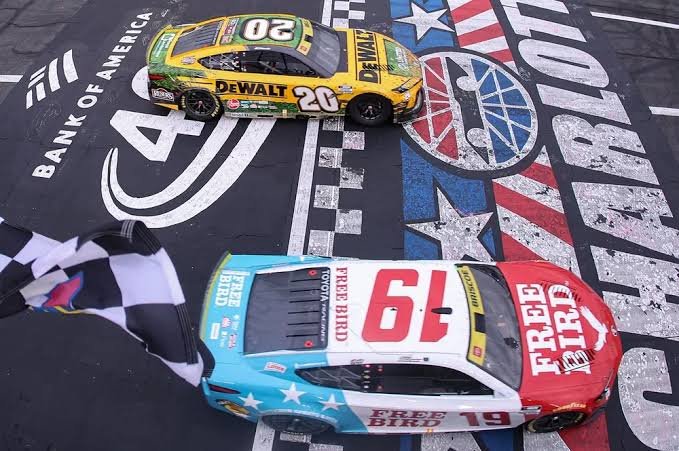
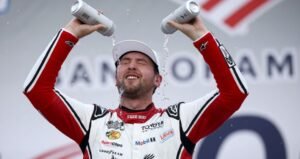
A NASCAR Cup Series protagonizou um dos finais mais dramáticos da temporada de 2026 no domingo, 11 de outubro. Chase Briscoe venceu a Bank of America 400, no Charlotte Motor Speedway, após uma batalha impressionante com seu companheiro de equipe na Joe Gibbs Racing, Christopher Bell. A corrida foi decidida por apenas 0,029 segundo na linha de chegada.
O resultado marcou a segunda vitória consecutiva de Briscoe na Chase, depois de seu triunfo em Las Vegas. Christopher Bell terminou em segundo, enquanto Ryan Blaney completou o pódio. O líder do campeonato, Kyle Larson, terminou em sexto, mas conseguiu ampliar sua vantagem na classificação.
O fim de semana foi marcado por mudanças na programação devido à chuva, vários incidentes envolvendo diferentes pilotos e uma disputa estratégica que permaneceu indefinida até os últimos instantes da corrida.
A chuva altera a programação do fim de semana
A Bank of America 400 estava programada para domingo, mas a chuva que atingiu Charlotte ao longo do fim de semana comprometeu a programação de treinos e classificação. Como as condições impediram a realização das sessões previstas para sábado, a NASCAR definiu o grid de largada de acordo com o regulamento da categoria.
Kyle Larson garantiu a pole position, enquanto Chase Briscoe largou em segundo. Christopher Bell começou a corrida na 17ª posição, enfrentando o desafio de avançar pelo pelotão para disputar a vitória.
A corrida aconteceu no tradicional oval de 1,5 milha do Charlotte Motor Speedway, em Concord, na Carolina do Norte. É importante diferenciar essa configuração do Charlotte Roval, o circuito misto utilizado em outras temporadas.
A Bank of America 400 teve 267 voltas, equivalentes a 400,5 milhas. A prova exigiu equilíbrio entre velocidade, gerenciamento dos pneus, estratégia de boxes e capacidade de aproveitar as relargadas.
Como a chuva impediu que as equipes completassem a programação normal de treinos, os times tiveram menos oportunidades para avaliar os carros e realizar ajustes. Nesse cenário, compreender as condições da pista e adaptar o acerto durante a corrida tornou-se ainda mais importante.
Kyle Larson controla o primeiro estágio
Kyle Larson começou a corrida demonstrando por que era considerado um dos favoritos em Charlotte. Largando da pole position, o piloto da Hendrick Motorsports assumiu o controle da prova e liderou as primeiras voltas.
O Chevrolet nº 5 apresentou bom equilíbrio nas curvas e velocidade suficiente para manter os adversários atrás. Larson administrou a liderança e venceu o primeiro estágio, conquistando pontos importantes para sua campanha pelo título.
Chase Briscoe também começou bem, permanecendo entre os primeiros colocados e demonstrando que sua vitória em Las Vegas não havia sido um resultado isolado. Christopher Bell avançou gradualmente pelo pelotão depois de largar no meio do grid.
Entretanto, o início da corrida não foi tranquilo para todos os candidatos ao campeonato. Denny Hamlin recebeu uma penalidade nos boxes por uma infração de segurança envolvendo um pneu que rolou para a área de outra equipe. O piloto da Joe Gibbs Racing precisou reiniciar a disputa na parte de trás do pelotão.
Ryan Blaney também foi penalizado por excesso de velocidade no pit road, enquanto Chase Elliott precisou retornar aos boxes para que uma roda dianteira fosse apertada novamente.
Essas penalidades comprometeram a posição de pista de alguns dos principais concorrentes e reforçaram a importância de uma execução precisa durante as paradas.
Acidentes provocam mudanças importantes no pelotão
A primeira parte da corrida também foi marcada por incidentes que afetaram diretamente a disputa.
Ty Gibbs sofreu danos após um incidente durante o início da prova. O Toyota nº 54 apresentou problemas na suspensão traseira direita, obrigando a equipe a realizar reparos prolongados nos boxes. Gibbs perdeu várias voltas e terminou em 34º lugar.
Joey Logano também precisou visitar o pit road para reparar danos na dianteira do carro após contato com outros competidores.
Outro incidente importante aconteceu na volta 77, quando Alex Bowman perdeu o controle do Chevrolet nº 48 e atingiu Bubba Wallace. Os dois carros bateram no muro externo, e o Chevrolet nº 24 de William Byron também sofreu danos irreparáveis.
Wallace conseguiu sair do carro por conta própria, mas o acidente encerrou sua participação competitiva. Bowman e Byron também não conseguiram continuar normalmente na disputa.
O episódio teve consequências importantes para a Chase. Byron, um dos candidatos ao título, perdeu a oportunidade de conquistar pontos fundamentais em uma fase na qual os resultados de cada etapa podem alterar significativamente a classificação.
Para as equipes que permaneceram na corrida, os acidentes também modificaram as estratégias. As bandeiras amarelas criaram oportunidades para paradas nos boxes e alteraram a ordem dos pilotos, permitindo que alguns competidores recuperassem posições.
Christopher Bell assume o protagonismo e vence o segundo estágio
Depois de um início mais discreto, Christopher Bell começou a ganhar destaque.
O piloto da Joe Gibbs Racing avançou pelo pelotão e passou a disputar diretamente a liderança com Larson. O Toyota nº 20 demonstrou um ritmo forte, especialmente em sequências mais longas, nas quais a consistência dos pneus e o equilíbrio do carro se tornavam cada vez mais importantes.
Bell conseguiu ultrapassar Larson e assumiu o controle da corrida. Em seguida, construiu uma vantagem significativa e venceu o segundo estágio.
Ryan Blaney também teve uma atuação competitiva, permanecendo entre os primeiros colocados e terminando o segmento em segundo. Denny Hamlin recuperou parte do terreno perdido após a penalidade, enquanto Larson continuou entre os principais concorrentes.
A vitória de Bell no estágio confirmou que ele tinha velocidade para lutar pelo resultado geral. Apesar de ter largado em 17º, sua recuperação demonstrou que a posição inicial não seria um obstáculo definitivo.
O resultado também foi importante para o campeonato. Os pontos conquistados nos estágios poderiam fazer diferença na classificação final da Chase, especialmente para um piloto que buscava reduzir a distância para Larson e Hamlin.
Denny Hamlin recupera posições, mas enfrenta dificuldades estratégicas
Denny Hamlin teve uma corrida de recuperação.
Depois da penalidade nos boxes, o piloto da Joe Gibbs Racing precisou avançar pelo pelotão para voltar a disputar as primeiras posições. Sua equipe conseguiu recuperar parte do terreno perdido durante as paradas, permitindo que ele voltasse a competir entre os primeiros colocados.
Entretanto, durante uma disputa em três linhas na pista, Hamlin entrou em contato com a traseira direita do carro de Larson. O incidente afetou a trajetória do Chevrolet nº 5 e fez o líder do campeonato perder posições.
Hamlin continuou competitivo e terminou em quinto, mas a penalidade inicial teve consequências importantes: ele não conseguiu somar pontos no primeiro estágio.
Em uma disputa pelo título, esses detalhes fazem diferença. Mesmo quando o ritmo é suficiente para terminar entre os primeiros, uma penalidade pode reduzir a pontuação e impedir que o piloto se aproxime do líder.
Hamlin deixou Charlotte ainda em segundo lugar na classificação da Chase, mas perdeu terreno em relação a Larson.
A estratégia de pneus define a disputa na parte final
À medida que a corrida avançava, o gerenciamento dos pneus tornou-se um dos fatores decisivos.
Larson havia demonstrado grande velocidade durante a primeira parte da prova, mas começou a enfrentar dificuldades de equilíbrio no trecho final. O carro ficou cada vez mais instável na traseira, exigindo correções constantes nas curvas.
Essa mudança reduziu sua capacidade de manter o mesmo ritmo dos adversários. Larson tentou administrar o desgaste e preservar o resultado, mas perdeu posições durante a sequência final.
Bell, por outro lado, continuou pressionando e permaneceu próximo de Briscoe. O Toyota nº 20 apresentou velocidade suficiente para reduzir a diferença, mesmo depois de passar boa parte da corrida recuperando posições.
Briscoe também enfrentou dificuldades. Nas últimas voltas, o piloto sentiu que poderia estar com um pneu perdendo pressão. O tráfego de pilotos retardatários tornou sua tarefa ainda mais complicada, obrigando-o a administrar a vantagem sem comprometer o carro.
A combinação de pneus desgastados, tráfego e pressão do adversário transformou uma corrida que parecia controlada em uma disputa aberta até a bandeirada.
Chase Briscoe assume a liderança e prepara o cenário para a vitória
Chase Briscoe apresentou uma atuação consistente desde o início.
O piloto da Joe Gibbs Racing largou em segundo e permaneceu próximo de Larson durante a primeira parte da corrida. Depois, continuou entre os primeiros colocados enquanto a disputa pela liderança passava por diferentes pilotos.
A equipe conseguiu executar boas paradas nos boxes, um dos aspectos mais importantes da corrida. Briscoe destacou posteriormente que a eficiência de sua equipe durante as paradas foi fundamental para manter a posição de pista e ganhar posições quando necessário.
Na fase final, Briscoe conseguiu assumir a liderança e abriu uma vantagem importante sobre Bell. Com poucas voltas restantes, parecia estar a caminho de uma vitória relativamente tranquila.
No entanto, o desgaste dos pneus e o tráfego mudaram completamente o cenário.
Bell começou a reduzir a diferença e se aproximou rapidamente do companheiro de equipe. O piloto do Toyota nº 20 encontrou mais velocidade nas voltas finais e passou a ameaçar diretamente a liderança.
Briscoe precisou defender sua posição até o último metro, transformando a corrida em um duelo entre dois carros da mesma equipe.
Uma chegada histórica: Briscoe vence Bell por 0,029 segundo
A última volta proporcionou o momento mais emocionante da Bank of America 400.
Bell chegou à parte final da corrida a poucos comprimentos de carro de Briscoe. O líder enfrentava dificuldades para contornar as curvas com a mesma eficiência de antes, enquanto o Toyota nº 20 se aproximava cada vez mais.
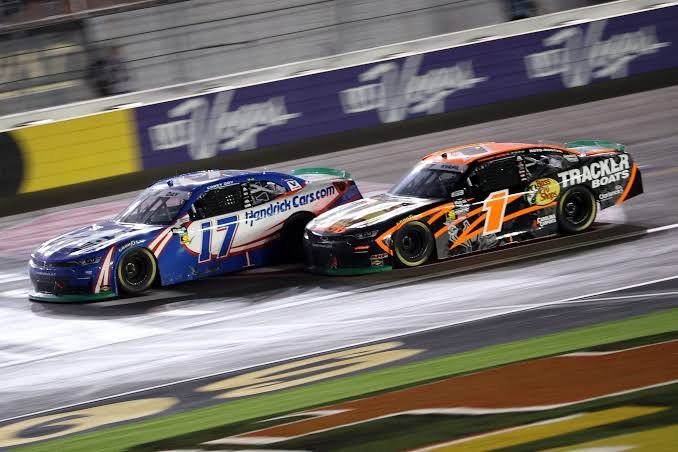
Na saída da curva 4, Bell conseguiu reduzir a diferença e emparelhou com Briscoe na aproximação da linha de chegada.
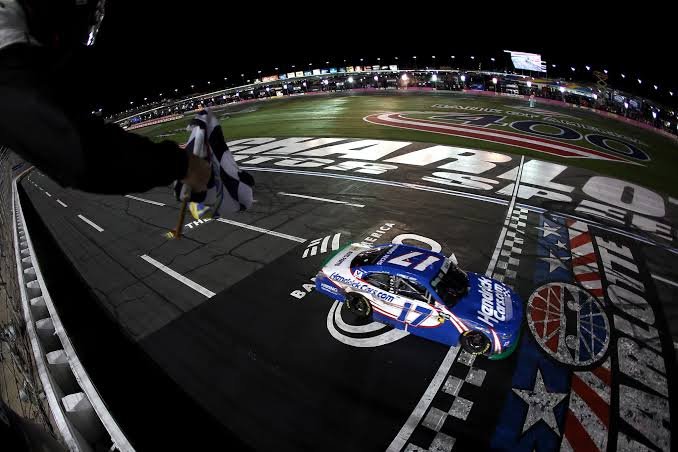
Os dois carros chegaram praticamente lado a lado. Houve contato entre os companheiros de equipe, mas Briscoe conseguiu manter uma pequena vantagem e cruzou a linha de chegada em primeiro.
A margem oficial foi de apenas 0,029 segundo.
Foi a segunda chegada mais apertada da história da Cup Series em Charlotte e a mais próxima da temporada de 2026 até aquele momento.
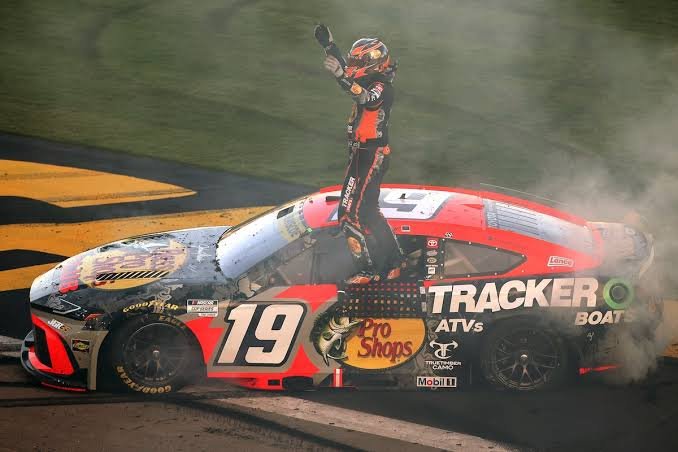
A vitória também marcou o segundo triunfo consecutivo de Briscoe na Chase, depois da vitória em Las Vegas. O piloto demonstrou capacidade para administrar a pressão e defender a liderança mesmo quando o carro já não oferecia a mesma segurança do início do trecho final.
Bell, por sua vez, ficou muito próximo de conquistar uma vitória que poderia ter um impacto importante em sua campanha pelo título. Perder por uma margem tão pequena foi frustrante, especialmente depois de recuperar uma diferença considerável nas últimas voltas.
Apesar da derrota, sua atuação confirmou que ele é um dos concorrentes mais fortes da temporada.
Ryan Blaney completa o pódio
Ryan Blaney terminou em terceiro lugar depois de uma corrida competitiva, marcada por uma penalidade nos boxes e pela recuperação ao longo dos segmentos.
O piloto da Team Penske demonstrou bom ritmo e permaneceu próximo dos líderes durante boa parte da prova. Embora não tenha conseguido acompanhar a disputa final entre Briscoe e Bell, o terceiro lugar representou um resultado importante para sua campanha na Chase.
Blaney também mostrou que sua equipe tinha velocidade suficiente para lutar por posições importantes em Charlotte. Entretanto, a penalidade no pit road impediu que aproveitasse plenamente o potencial do carro.
O resultado permitiu que ele permanecesse entre os cinco primeiros da classificação do campeonato, embora ainda precisasse reduzir a diferença para Larson nas etapas seguintes.
Josh Berry conquista um resultado importante
Josh Berry foi uma das surpresas positivas da etapa.
O piloto da Wood Brothers Racing largou em 27º e terminou em quarto, recuperando 23 posições ao longo das 267 voltas.
A atuação foi especialmente relevante porque Berry não integrava a disputa da Chase pelo título. Mesmo assim, conseguiu competir diretamente com alguns dos principais candidatos ao campeonato e terminou à frente de vários pilotos de equipes maiores.
Sua recuperação demonstra a importância da estratégia, da consistência e do aproveitamento das oportunidades criadas pelas bandeiras amarelas.
O quarto lugar também representou um resultado importante para a Wood Brothers Racing, que conseguiu colocar seu Ford nº 21 entre os primeiros colocados em uma das etapas mais competitivas da fase decisiva da temporada.
Kyle Larson termina em sexto, mas amplia a liderança
Kyle Larson cruzou a linha de chegada em sexto lugar, encerrando uma sequência de cinco resultados consecutivos entre os cinco primeiros nas corridas da Chase em 2026.
Embora não tenha conseguido lutar pela vitória até o final, Larson saiu de Charlotte em uma situação favorável no campeonato.
O piloto venceu o primeiro estágio, liderou 97 voltas e demonstrou velocidade para controlar boa parte da corrida. Entretanto, a perda de equilíbrio dos pneus na fase final impediu que mantivesse o ritmo necessário para disputar o pódio.
Larson explicou que o carro ficou muito instável na traseira durante as últimas 15 a 18 voltas, dificultando o controle e obrigando-o a se concentrar em levar o Chevrolet nº 5 até a bandeirada.
Apesar da queda de rendimento, o sexto lugar foi suficiente para ampliar sua vantagem sobre Denny Hamlin de 40 para 49 pontos.
Esse detalhe é fundamental para entender a importância do resultado. Larson não precisou vencer para sair fortalecido: enquanto alguns rivais enfrentaram acidentes ou penalidades, ele conseguiu terminar a prova e preservar uma vantagem importante.
A regularidade continua sendo uma das maiores forças de sua campanha pelo título.
Classificação final da Bank of America 400
Os dez primeiros colocados da etapa foram:
- Chase Briscoe — Toyota nº 19, Joe Gibbs Racing.
- Christopher Bell — Toyota nº 20, Joe Gibbs Racing.
- Ryan Blaney — Ford nº 12, Team Penske.
- Josh Berry — Ford nº 21, Wood Brothers Racing.
- Denny Hamlin — Toyota nº 11, Joe Gibbs Racing.
- Kyle Larson — Chevrolet nº 5, Hendrick Motorsports.
- Shane van Gisbergen — Chevrolet nº 97, Trackhouse Racing.
- Tyler Reddick — Toyota nº 45, 23XI Racing.
- Joey Logano — Ford nº 22, Team Penske.
- Chris Buescher — Ford nº 17, RFK Racing.
Briscoe completou as 267 voltas e liderou 62 delas. Bell liderou 93 voltas, enquanto Larson foi o piloto que mais permaneceu na frente, com 97 voltas lideradas.
A corrida teve 11 mudanças de liderança entre cinco pilotos, evidenciando que diferentes equipes tiveram condições de disputar a ponta ao longo da prova.
A Chase após Charlotte: Larson amplia a vantagem
A Bank of America 400 foi a sexta etapa da Chase da Cup Series. O resultado fortaleceu a posição de Larson na liderança e impulsionou Briscoe na classificação.
Larson aumentou sua vantagem sobre Hamlin para 49 pontos. Briscoe, com duas vitórias consecutivas, avançou duas posições e chegou ao quarto lugar, 65 pontos atrás do líder.
A classificação também manteve Christopher Bell e Ryan Blaney entre os principais candidatos ao título.
A situação dos primeiros colocados após Charlotte ficou assim:
- 1º — Kyle Larson: líder do campeonato, com 49 pontos de vantagem sobre o segundo colocado.
- 2º — Denny Hamlin: permanece na disputa, mas perdeu terreno para Larson.
- 3º — Christopher Bell: o segundo lugar em Charlotte reforçou sua campanha.
- 4º — Chase Briscoe: duas vitórias consecutivas e 65 pontos atrás do líder.
- 5º — Ryan Blaney: terceiro lugar na corrida, 85 pontos atrás de Larson.
- 6º — Joey Logano: caiu duas posições e ficou 92 pontos atrás do líder.
Os números mostram que a disputa continua aberta, mas os resultados começam a separar os pilotos que conseguem manter a regularidade daqueles que precisam de uma recuperação mais agressiva.
Larson continua em uma posição privilegiada, enquanto Briscoe surge como um dos principais nomes a observar após sua sequência de vitórias.
O que esperar da próxima etapa em Phoenix?
A NASCAR Cup Series segue para o Phoenix Raceway no domingo, 18 de outubro, para a Freeway Insurance 500.
A etapa será disputada em um oval de uma milha, com 312 voltas previstas. O circuito apresenta características diferentes das de Charlotte, exigindo atenção especial ao desgaste dos pneus, ao equilíbrio nas curvas e ao comportamento dos carros em meio ao tráfego.
Para Larson, Phoenix será uma oportunidade de defender a liderança e continuar administrando sua vantagem na Chase.
Hamlin precisará recuperar terreno para evitar que a diferença aumente ainda mais. Bell chega motivado pelo ritmo demonstrado em Charlotte, enquanto Briscoe tentará conquistar sua terceira vitória consecutiva e continuar subindo na classificação.
Blaney também terá a oportunidade de reduzir a distância para os líderes, enquanto Logano precisa de um resultado mais forte para recuperar as posições perdidas.
Com a temporada entrando em sua fase decisiva, Phoenix poderá representar uma mudança importante no equilíbrio do campeonato.
Conclusão: Charlotte entrega uma das chegadas mais emocionantes da temporada
A Bank of America 400 foi uma das corridas mais marcantes da NASCAR Cup Series em 2026. Chase Briscoe venceu Christopher Bell por apenas 0,029 segundo depois de uma disputa intensa na última volta, conquistando sua segunda vitória consecutiva na Chase.
Bell demonstrou velocidade para vencer e recuperou uma diferença significativa nas voltas finais, mas não conseguiu completar a ultrapassagem. Ryan Blaney terminou em terceiro, enquanto Josh Berry conquistou um resultado expressivo com a Wood Brothers Racing.
Kyle Larson, apesar de terminar em sexto, foi um dos grandes beneficiados pelo resultado. Sua capacidade de pontuar mesmo sem disputar a vitória permitiu ampliar a vantagem na classificação e reforçar sua candidatura ao título.
A etapa também evidenciou como acidentes, penalidades e gerenciamento de pneus podem alterar o resultado de uma corrida. Bowman, Wallace e Byron foram atingidos por um dos principais incidentes, enquanto Hamlin perdeu pontos importantes após uma infração nos boxes.
Briscoe sai de Charlotte com confiança renovada, Bell continua competitivo e Larson mantém o controle do campeonato. Com a próxima etapa em Phoenix, a disputa pelo título entra em uma fase ainda mais importante.
Em Charlotte, a diferença entre vitória e derrota foi de apenas 0,029 segundo. Na Chase, porém, o impacto desse resultado poderá ser sentido até a decisão do campeonato.
NASCAR Cup Series: Chase Briscoe Beats Christopher Bell by 0.029 Seconds in a Thrilling Charlotte Finish
The NASCAR Cup Series delivered one of the most dramatic finishes of the 2026 season on Sunday, October 11. Chase Briscoe won the Bank of America 400 at Charlotte Motor Speedway after an incredible battle with his Joe Gibbs Racing teammate Christopher Bell, with the race decided by just 0.029 seconds at the finish line.
The result marked Briscoe’s second consecutive Chase victory following his win at Las Vegas. Christopher Bell finished second, while Ryan Blaney completed the podium. Championship leader Kyle Larson finished sixth but managed to extend his advantage in the standings.
The weekend was affected by rain, multiple incidents involving several drivers and a strategic battle that remained unresolved until the final moments of the race.
Rain Disrupts the Weekend Schedule
The Bank of America 400 was scheduled for Sunday, but rain affecting Charlotte throughout the weekend disrupted the practice and qualifying schedule. With conditions preventing the planned Saturday sessions from taking place, NASCAR determined the starting grid according to the series’ regulations.
Kyle Larson secured pole position, while Chase Briscoe started second. Christopher Bell began the race in 17th, facing the challenge of working his way through the field to compete for the victory.
The race took place on Charlotte Motor Speedway’s traditional 1.5-mile oval in Concord, North Carolina. It is important to distinguish this event from the Charlotte Roval, the road course configuration used in other seasons.
The Bank of America 400 covered 267 laps, equivalent to 400.5 miles. The race demanded a careful balance between speed, tire management, pit strategy and the ability to capitalize on restarts.
With rain preventing the teams from completing their normal practice schedule, crews had fewer opportunities to evaluate their cars and make setup adjustments. Under these circumstances, understanding track conditions and adapting during the race became even more important.
Kyle Larson Controls the Opening Stage
Kyle Larson started the race strongly, demonstrating why he was considered one of the favorites at Charlotte. Starting from pole position, the Hendrick Motorsports driver took control of the race and led the opening laps.
The No. 5 Chevrolet showed good balance through the corners and enough speed to keep competitors behind. Larson managed the lead effectively and won Stage 1, collecting valuable points toward his championship campaign.
Chase Briscoe also made a strong start, remaining among the front-runners and demonstrating that his Las Vegas victory was no isolated result. Christopher Bell gradually advanced through the field after starting in the middle of the pack.
However, the opening portion of the race was not trouble-free for every championship contender. Denny Hamlin received a pit-road penalty for a safety violation involving a tire that rolled into another team’s area. The Joe Gibbs Racing driver was forced to restart at the back of the field.
Ryan Blaney was also penalized for speeding on pit road, while Chase Elliott had to return to the pits to have a front wheel tightened.
These penalties compromised the track positions of several leading competitors and reinforced the importance of precise execution during pit stops.
Crashes Create Major Changes in the Field
The early stages of the race were also marked by incidents that directly affected the competition.
Ty Gibbs sustained damage following an incident during the opening portion of the event. The No. 54 Toyota developed right-rear suspension problems, forcing the team to make extensive repairs in the pits. Gibbs lost several laps and finished 34th.
Joey Logano also had to visit pit road to repair front-end damage following contact with other competitors.
Another significant incident occurred on Lap 77, when Alex Bowman lost control of the No. 48 Chevrolet and collided with Bubba Wallace. Both cars hit the outside wall, and William Byron’s No. 24 Chevrolet also sustained irreparable damage.
Wallace was able to exit his car on his own, but the crash ended his competitive participation. Bowman and Byron were also unable to continue normally in the race.
The incident had important implications for the Chase. Byron, one of the championship contenders, lost an opportunity to score valuable points at a stage of the season when every result can significantly affect the standings.
For the teams that remained in contention, the crashes also changed their strategies. Caution periods created opportunities for pit stops and altered the running order, allowing drivers who needed to recover positions to make progress.
Christopher Bell Takes Over and Wins Stage 2
After a relatively quiet start, Christopher Bell began to emerge as a major contender.
The Joe Gibbs Racing driver worked his way through the field and started challenging Larson directly for the lead. The No. 20 Toyota demonstrated strong pace, particularly over longer runs when tire consistency and car balance became increasingly important.
Bell eventually passed Larson and took control of the race. He then built a significant advantage and won Stage 2.
Ryan Blaney also delivered a competitive performance, remaining near the front and finishing second in the segment. Denny Hamlin recovered some of the ground lost after his penalty, while Larson continued to run among the leading contenders.
Bell’s stage victory confirmed that he had the speed to fight for the overall win. Although he had started 17th, his recovery demonstrated that the starting position would not be a permanent obstacle.
The result was also important for the championship. Stage points could make a difference in the final Chase standings, particularly for a driver looking to reduce the gap to Larson and Hamlin.
Denny Hamlin Recovers but Faces Strategic Challenges
Denny Hamlin experienced a race of recovery.
Following his pit-road penalty, the Joe Gibbs Racing driver had to work his way through the field to return to contention. His team managed to recover some of the lost ground during pit stops, allowing him to compete among the front-runners again.
However, during a three-wide battle on the track, Hamlin made contact with the right rear of Larson’s car. The incident affected the No. 5 Chevrolet’s trajectory and caused the championship leader to lose positions.
Hamlin remained competitive and finished fifth, but the initial penalty had important consequences: he was unable to collect points in the first stage.
In a championship battle, these details matter. Even when race pace is sufficient to finish near the front, a penalty can reduce the points earned and prevent a driver from closing the gap to the leader.
Hamlin left Charlotte still second in the Chase standings, but he lost ground to Larson.
Tire Strategy Shapes the Closing Stages
As the race progressed, tire management became one of the decisive factors.
Larson had demonstrated considerable speed during the first part of the race, but he began experiencing balance problems in the closing stages. The car became increasingly loose, requiring constant corrections through the corners.
This change reduced his ability to maintain the pace of his rivals. Larson attempted to manage the tire wear and preserve his result, but he lost positions during the final sequence.
Bell, on the other hand, continued pushing and remained close to Briscoe. The No. 20 Toyota showed enough speed to close the gap, even after spending much of the race recovering positions.
Briscoe also encountered difficulties. In the closing laps, he felt that one of his tires might be losing pressure. Traffic from lapped cars made his task even more challenging, forcing him to manage the lead without compromising the car.
The combination of worn tires, traffic and pressure from a teammate turned what had appeared to be a controlled race into a battle that remained open until the checkered flag.
Chase Briscoe Takes the Lead and Sets Up the Victory
Chase Briscoe delivered a consistent performance from the beginning.
The Joe Gibbs Racing driver started second and remained close to Larson during the opening stages. He then stayed among the front-runners as the battle for the lead shifted between different competitors.
The team executed strong pit stops, one of the most important aspects of the race. Briscoe later emphasized that his crew’s efficiency in the pits played a crucial role in maintaining track position and gaining places when necessary.
In the final stages, Briscoe took the lead and opened a significant gap over Bell. With only a few laps remaining, he appeared to be heading toward a relatively comfortable victory.
However, tire wear and traffic completely changed the situation.
Bell began closing the gap and quickly approached his teammate. The No. 20 Toyota found additional speed in the closing laps and began threatening the lead directly.
Briscoe was forced to defend his position until the final meters, transforming the race into a duel between two cars from the same team.
A Historic Finish: Briscoe Beats Bell by 0.029 Seconds
The final lap delivered the most exciting moment of the Bank of America 400.
Bell reached the final section of the race just a few car lengths behind Briscoe. The leader was struggling to navigate the corners as efficiently as before, while the No. 20 Toyota continued closing in.
Coming out of Turn 4, Bell reduced the gap and drew alongside Briscoe on the approach to the finish line.
The two cars crossed almost side by side. Contact occurred between the teammates, but Briscoe managed to maintain a narrow advantage and crossed the line first.
The official margin of victory was just 0.029 seconds.
It was the second-closest finish in Cup Series history at Charlotte and the closest finish of the 2026 season up to that point.
The victory also marked Briscoe’s second consecutive Chase win following his triumph at Las Vegas. He demonstrated his ability to handle pressure and defend the lead even when his car no longer provided the same level of confidence it had earlier in the final run.
Bell, meanwhile, came extremely close to securing a victory that could have significantly affected his championship campaign. The driver acknowledged the frustration of losing by such a small margin, particularly after closing a substantial gap during the final laps.
Despite the defeat, his performance confirmed that he remains one of the strongest competitors in the series.
Ryan Blaney Completes the Podium
Ryan Blaney finished third after a competitive race marked by a pit-road penalty and a recovery through the field.
The Team Penske driver demonstrated strong pace and remained close to the leaders for much of the event. Although he could not match the final battle between Briscoe and Bell, third place represented an important result for his Chase campaign.
Blaney also demonstrated that his team had the speed to compete for significant positions at Charlotte. However, the pit-road penalty prevented him from fully capitalizing on the car’s potential.
The result allowed him to remain among the top five in the championship standings, although he still needed to reduce the gap to Larson in the upcoming races.
Josh Berry Delivers an Important Result
Josh Berry was one of the positive surprises of the event.
The Wood Brothers Racing driver started 27th and finished fourth, gaining 23 positions over the 267 laps.
His performance was particularly noteworthy because Berry was not competing in the championship Chase. Nevertheless, he raced directly against several of the leading title contenders and finished ahead of drivers representing larger teams.
His recovery demonstrated the importance of strategy, consistency and taking advantage of opportunities created by caution periods.
The fourth-place finish was also an important result for Wood Brothers Racing, which placed its No. 21 Ford among the leading competitors in one of the most competitive races of the season’s decisive phase.
Kyle Larson Finishes Sixth but Extends His Championship Lead
Kyle Larson crossed the finish line in sixth place, ending a run of five consecutive top-five finishes in the 2026 Chase races.
Although he could not fight for victory until the end, Larson left Charlotte in a favorable championship position.
The driver won Stage 1, led 97 laps and demonstrated enough speed to control much of the race. However, declining tire performance in the final stages prevented him from maintaining the pace required to challenge for the podium.
Larson explained that the car became very loose during the final 15 to 18 laps, making it more difficult to control and forcing him to focus on bringing the No. 5 Chevrolet to the finish.
Despite the loss of pace, sixth place was enough to extend his advantage over Denny Hamlin from 40 to 49 points.
This detail is essential to understanding the importance of the result. Larson did not need to win to leave Charlotte in a stronger position. While some rivals suffered crashes or penalties, he managed to finish the race and preserve a significant championship advantage.
Consistency remains one of the greatest strengths of his title campaign.
Bank of America 400: Final Top 10
The top 10 finishers were:
- Chase Briscoe — No. 19 Toyota, Joe Gibbs Racing.
- Christopher Bell — No. 20 Toyota, Joe Gibbs Racing.
- Ryan Blaney — No. 12 Ford, Team Penske.
- Josh Berry — No. 21 Ford, Wood Brothers Racing.
- Denny Hamlin — No. 11 Toyota, Joe Gibbs Racing.
- Kyle Larson — No. 5 Chevrolet, Hendrick Motorsports.
- Shane van Gisbergen — No. 97 Chevrolet, Trackhouse Racing.
- Tyler Reddick — No. 45 Toyota, 23XI Racing.
- Joey Logano — No. 22 Ford, Team Penske.
- Chris Buescher — No. 17 Ford, RFK Racing.
Briscoe completed all 267 laps and led 62 of them. Bell led 93 laps, while Larson spent the most time at the front, leading 97 laps.
The race featured 11 lead changes among five drivers, demonstrating that multiple teams had the pace to compete for the lead throughout the afternoon.
The Chase After Charlotte: Larson Extends His Advantage
The Bank of America 400 was the sixth race of the Cup Series Chase. The result strengthened Larson’s position at the top of the standings and boosted Briscoe’s championship campaign.
Larson increased his advantage over Hamlin to 49 points. Briscoe, with two consecutive victories, gained two positions and moved into fourth place, 65 points behind the leader.
The result also kept Christopher Bell and Ryan Blaney among the leading championship contenders.
The situation among the leading drivers after Charlotte was as follows:
- 1st — Kyle Larson: championship leader, with a 49-point advantage over second place.
- 2nd — Denny Hamlin: remains in contention but lost ground to Larson.
- 3rd — Christopher Bell: his second-place finish at Charlotte strengthened his campaign.
- 4th — Chase Briscoe: two consecutive victories, 65 points behind the leader.
- 5th — Ryan Blaney: third place in the race, 85 points behind Larson.
- 6th — Joey Logano: dropped two positions and sits 92 points behind the leader.
The numbers show that the championship remains open, but the results are beginning to separate drivers who can maintain consistency from those who need a more aggressive recovery.
Larson remains in a favorable position, while Briscoe has emerged as one of the drivers to watch following his consecutive victories.
What to Expect at Phoenix
The NASCAR Cup Series heads to Phoenix Raceway on Sunday, October 18, for the Freeway Insurance 500.
The race will take place on a one-mile oval, with 312 laps scheduled. The circuit presents different characteristics from Charlotte, requiring particular attention to tire wear, cornering balance and car behavior in traffic.
For Larson, Phoenix will be an opportunity to defend his lead and continue managing his advantage in the Chase.
Hamlin will need to recover ground to prevent the gap from increasing further. Bell arrives encouraged by his pace at Charlotte, while Briscoe will attempt to secure his third consecutive victory and continue climbing the standings.
Blaney will also have an opportunity to reduce the gap to the leaders, while Logano needs a stronger result to recover the positions he lost.
As the season enters its decisive phase, Phoenix could represent another significant turning point in the championship battle.
Conclusion: Charlotte Delivers One of the Season’s Most Exciting Finishes
The Bank of America 400 was one of the most memorable races of the 2026 NASCAR Cup Series season. Chase Briscoe beat Christopher Bell by just 0.029 seconds after an intense battle on the final lap, securing his second consecutive Chase victory.
Bell demonstrated the speed to win and closed a substantial gap during the final laps, but he could not complete the pass. Ryan Blaney finished third, while Josh Berry delivered an impressive result for Wood Brothers Racing.
Kyle Larson, despite finishing sixth, was one of the major beneficiaries of the result. His ability to score points without challenging for the victory allowed him to extend his championship advantage and strengthen his title campaign.
The race also demonstrated how crashes, penalties and tire management can determine the outcome of a NASCAR event. Bowman, Wallace and Byron were involved in a major incident, while Hamlin lost valuable points following his pit-road violation.
Briscoe leaves Charlotte with renewed confidence, Bell remains competitive, and Larson continues to control the championship. With Phoenix next on the schedule, the title battle is entering an even more important phase.
At Charlotte, the difference between victory and defeat was just 0.029 seconds. In the Chase, however, the impact of that result could be felt all the way to the championship finale.
Por: Ana Elisa
@ana_arquiteturaevelocidade
Tradução: Autoral
Informações/dados: Nascar